
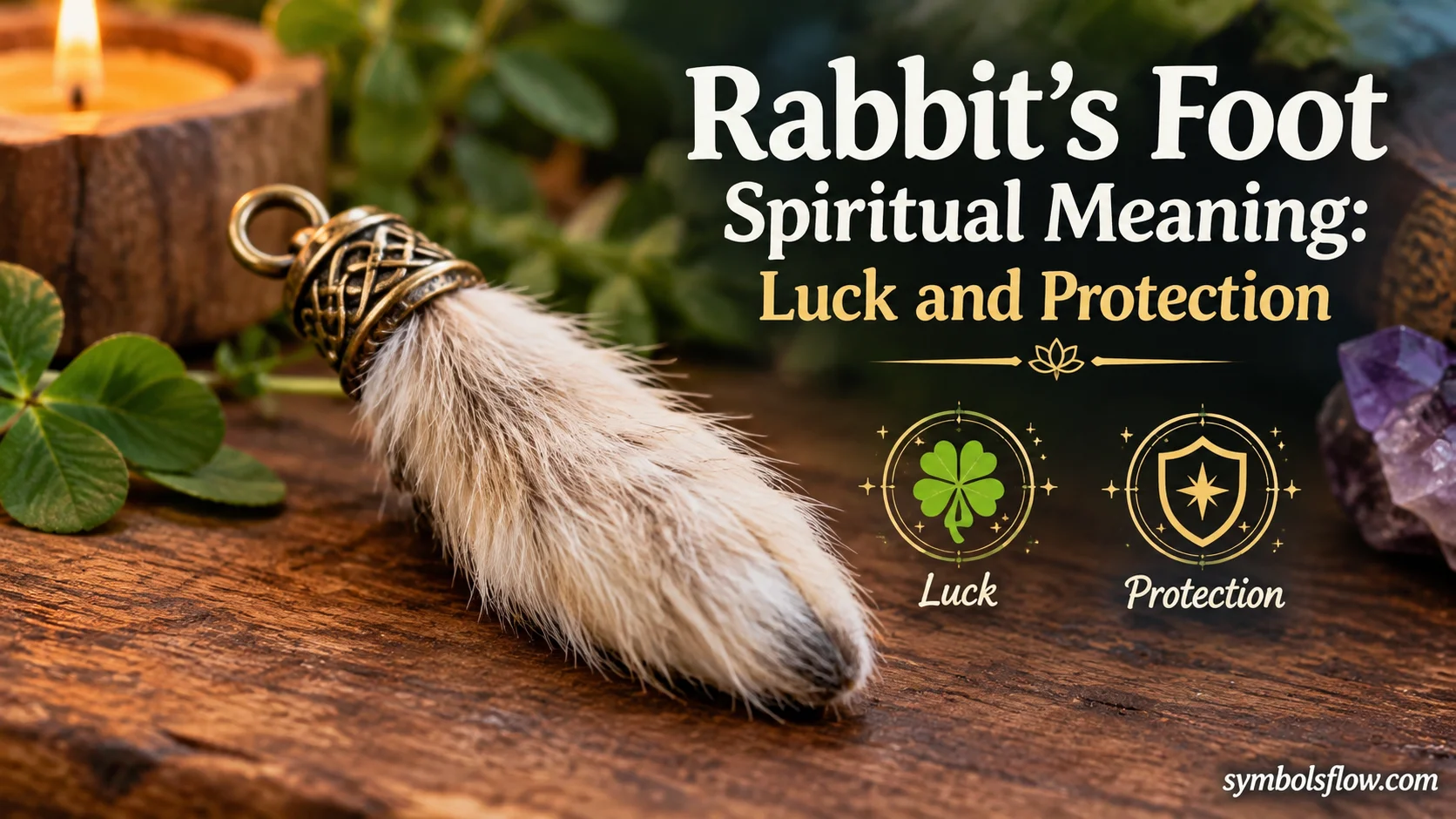
Rabbit’s Foot Spiritual Meaning: Luck and Protection connects the rabbit foot with luck, protection, and a lasting tradition.
The phrase rabbit rabbit is linked with the first of the month, when some followers believe their first words should be “rabbit rabbit” to invite good luck for the rest of the month. This superstition reflects how the rabbit became a familiar symbol of luck across cultures and generations. The rabbit’s foot became a powerful token because people connected the animal and its foot with fortunate events.
In old folklore, people carried this charm or gifted it during meaningful life moments, giving it curious symbolism and deeper spiritual meaning. Its folklore connects with metaphysical ideas about energy transformation, manifestation, and personal spiritual protection. The tradition is linked with actress Sarah Jessica Parker and President Franklin Delano Roosevelt, who carried a rabbit’s foot for good luck.
“Let’s dive in!
Quick Answer
Rabbit’s Foot Spiritual Meaning: Luck and Protection centers on good fortune, protection, resilience, and hope in American folklore. The charm is especially associated with African American folk traditions in the American South, while broader rabbit symbolism can include fertility, adaptability, and renewal.
TL;DR
- Rabbit’s feet became widely recognized as American good-luck charms.
- The tradition has strong connections to African American folk magic.
- Protection and luck are its most familiar modern meanings.
- Rabbits can also symbolize fertility, cleverness, speed, and resilience.
- Historical versions often included unusual rules about how the foot was obtained.
- Modern versions are often cultural symbols rather than active charms.
What Does a Rabbit’s Foot Symbolize?
A rabbit’s foot can represent several related ideas, depending on the person and context. In the United States, however, luck is usually the clearest association.
The charm also carries an interesting connection between vulnerability and survival. Rabbits are small animals that rely on speed, awareness, and quick movement. As a result, the rabbit can symbolize finding a way forward when circumstances seem difficult.
Luck and Good Fortune
The most familiar meaning is favorable luck. People may carry the charm before an important event, keep it as a personal keepsake, or give it as a good-luck gift.
Protection is closely connected with this idea. If something is believed to attract favorable outcomes, it may also become a symbolic reminder of safety and confidence.
Resilience and Resourcefulness
Rabbit symbolism can also suggest cleverness and adaptability. African American Brer Rabbit stories especially developed the rabbit as a trickster who survives through intelligence rather than physical strength.
This gives the rabbit a deeper meaning than simple luck. The charm can represent the ability to notice danger, react quickly, and overcome obstacles.
The Historical Roots of the Rabbit’s Foot
The exact origin of the rabbit’s-foot charm cannot be reduced to one ancient culture. Historical evidence shows several overlapping traditions involving rabbits, animal parts, folk magic, and protective objects.
In Britain and Europe, rabbit and hare body parts were associated with various folk beliefs before the American charm became popular. American folklore later developed its own distinctive form.
Older European Beliefs
Some European traditions treated rabbits and hares as unusual animals because they lived partly underground and moved quickly. Their behavior encouraged associations with mystery, fertility, the earth, and supernatural forces.
However, these older beliefs should not be presented as proof that the modern American rabbit’s foot directly came from one ancient European ritual. The historical path is more complicated.
The American Development
By the late nineteenth and early twentieth centuries, the rabbit’s foot was clearly documented as a luck charm in the United States. A Smithsonian collection includes a rabbit’s-foot amulet dated to about 1898.
Early American folklore records also describe rabbit feet being carried for luck, with some traditions specifying the left hind foot or unusual circumstances surrounding the rabbit’s death.
Rabbit’s Foot and African American Folk Traditions
This is one of the most important parts of the story. Historical folklore research has repeatedly connected the American rabbit’s-foot tradition with African American folk magic, particularly practices associated with hoodoo.
Hoodoo developed in the United States through a mixture of African, European, and other regional influences. It included charms, protective practices, roots, objects, prayers, and other forms of folk practice.
A Charm Within a Larger Tradition
The rabbit’s foot was not simply an isolated object. Historical accounts place it alongside other protective and luck-related objects.
For example, a 1936 Library of Congress folklore interview recorded a rabbit’s forefoot being used with other objects in a protective practice intended to prevent separation between a husband and wife.
That evidence shows why the charm deserves more historical attention than its modern novelty-shop appearance suggests.
Brer Rabbit and Cultural Memory
Rabbit symbolism also became important through African American storytelling. Brer Rabbit appears as a clever trickster who repeatedly survives stronger opponents.
The Library of Congress describes these stories as part of African American oral tradition. The Smithsonian likewise notes that rabbit stories could preserve cultural memory and provide examples of intelligence and survival.
What Does a Rabbit’s Foot Mean in America?
In the United States, the rabbit’s foot became a broad symbol of luck that eventually moved beyond its original regional and cultural settings.
By the twentieth century, it appeared in popular entertainment, advertising, souvenirs, personal accessories, and everyday conversation. The result was a familiar American image of the lucky charm.
Common American Associations
| Context | Meaning in the USA | Common Association | Notes |
| Personal charm | Good luck | Confidence and hope | Often carried privately |
| Gift | Good wishes | New beginnings | Given before important events |
| Folklore | Protection | Avoiding misfortune | Rooted in older folk beliefs |
| Brer Rabbit stories | Clever survival | Intelligence and resourcefulness | Strong African American cultural context |
| Vintage keychain | Nostalgia | Americana | Often detached from original traditions |
The meaning also changed as the charm became commercialized. A historically specific folk object could become a general symbol that many Americans recognized without knowing its background.
Why Is the Left Rabbit’s Foot Considered Lucky?
The left hind foot appears frequently in older American descriptions of the rabbit’s-foot tradition. However, there was never one universally accepted set of rules.
Some accounts required a rabbit killed in a graveyard. Others added conditions involving midnight, the moon, Friday, or other unusual circumstances. Different folklore collections record different versions.
The Meaning of the Unusual Conditions
These strange requirements helped make the charm seem powerful because they placed it outside ordinary daily life. Graveyards, darkness, unusual moon phases, and other liminal settings were often treated as spiritually significant in folk traditions.
However, these details should be understood as variations of folklore rather than universal rules. The rabbit’s foot sold as a modern charm generally does not follow the complicated requirements found in older accounts.
Rabbit Symbolism: Fertility, Speed, and Survival
The rabbit itself contributes much of the charm’s symbolism. Its rapid reproduction has made rabbits associated with fertility and abundance in many traditions.
At the same time, a rabbit’s ability to run, hide, and change direction creates another symbolic layer. It can represent alertness, quick thinking, adaptability, and survival.
Three Important Rabbit Associations
- Fertility: Rabbits can represent growth, creation, and abundance.
- Speed: Their movement can symbolize quick action and opportunity.
- Resourcefulness: Their survival skills suggest cleverness under pressure.
- Renewal: Rabbits can connect with seasonal cycles and new beginnings.
- Protection: Their cautious nature can symbolize awareness of danger.
These meanings help explain why rabbit imagery remains popular even without the physical charm.
Read More: Two Headed Snake Spiritual Meaning: Duality & Power
Spiritual and Cross-Cultural Meanings
Rabbit symbolism appears in many cultural settings, but the meanings are not identical. It’s better to view these traditions as separate interpretations rather than one universal belief.
In some European traditions, rabbits and hares were connected with fertility, the underground world, and supernatural beliefs. In African and African diaspora storytelling, rabbits often appear as clever tricksters.
African American Spiritual Context
The American rabbit’s-foot tradition is particularly important within the history of African American folk practices. Historical sources document its use as a luck charm and connect it with broader traditions of charms and conjure.
Broader Spiritual Interpretation
Modern spiritual readers may interpret the rabbit’s foot more symbolically than literally. They may see it as a reminder to remain hopeful, alert, protected, or ready for change.
These modern interpretations are personal meanings. They shouldn’t automatically be presented as ancient teachings shared by every culture.
Rabbit’s Foot Meaning for Protection
Protection is one of the strongest secondary meanings associated with the charm. Historically, protective folk objects were often carried close to the body because physical closeness was thought to strengthen their relationship with the person.
Today, protection can have a more symbolic meaning. Someone might carry a charm because it makes them feel prepared, grounded, or connected to family tradition.
Protection Can Symbolize
- Feeling safer during uncertain periods
- Carrying a reminder of family tradition
- Building confidence before a major event
- Remembering personal resilience
- Creating a sense of emotional security
- Holding onto hope during difficult changes
The important distinction is between cultural belief and proven physical protection. A rabbit’s foot is a folklore object, not a scientifically established protective device.
Emotional and Psychological Meaning
A lucky charm can influence how a person feels without requiring a supernatural explanation. Familiar objects often become emotional anchors because they connect memories, intentions, and personal experiences.
For example, someone may carry a rabbit’s foot before an interview because it reminds them of encouragement from a parent. The object then represents confidence, regardless of whether they believe it causes luck.
The Comfort of a Personal Talisman
Talismanic objects can give uncertainty a visible form. Instead of simply hoping for a good outcome, a person has something tangible that represents that hope.
This can make the rabbit’s foot meaningful as a psychological symbol of courage. Its deeper message may become, “I’m ready for whatever happens next.”
Rabbit’s Foot in Modern American Culture
The rabbit’s foot has shifted dramatically from a specialized folk charm to a recognizable piece of Americana.
Vintage versions often appear as keychains or collectibles. Modern artists may also use rabbit-foot imagery without believing in the original superstition.
Tattoos and Jewelry
A rabbit’s foot tattoo can represent luck, survival, family history, or personal resilience. Some designs use the foot alone, while others combine it with a chain, horseshoe, moon, flowers, or stars.
Jewelry can similarly turn the symbol into a personal reminder. In these cases, the meaning depends heavily on the wearer rather than one fixed tradition.
Social Media and Decor
Online, rabbit imagery often communicates playful ideas about luck and good fortune. Rabbit-foot motifs can also appear in vintage-inspired decor and Americana collections.
However, digital use tends to simplify the history. A complicated folk tradition may become a simple visual shorthand for “good luck.”
Why Did the Rabbit’s Foot Become a Keychain?
The keychain helped transform the rabbit’s foot into a mass-market object. Instead of being used within a specific folk practice, it became something people could buy, carry, display, or give as a novelty.
The Smithsonian preserves an actual rabbit’s-foot amulet from around 1898, showing that the physical charm has a long documented place in American material culture.
Over time, colorful versions became especially familiar. That commercialization helped spread the symbol while also separating it from much of its original cultural context.
Misunderstandings and Controversies
The rabbit’s-foot tradition has a complicated history, especially because some nineteenth- and early twentieth-century commercial descriptions used racist language and stereotypes.
Historical accounts sometimes described the supposed maker of the charm using offensive racial stereotypes. These descriptions are part of the documented history of how the object was marketed, not respectful explanations of African American culture.
Separating Tradition From Stereotype
The African American roots of the charm should not be confused with the stereotypes that later surrounded it. The folklore itself represents a complex cultural tradition with its own history.
The broader history of Brer Rabbit provides another example of this problem. African American storytelling was later adapted and commercialized by outsiders, leading to long-running debates about cultural representation and appropriation.
Understanding this history makes the symbol more meaningful, not less.
How the Meaning Has Changed Over Time
The rabbit’s foot has moved through several stages of meaning. It began as part of specific folk beliefs, became a recognizable American luck charm, and eventually became a commercial symbol of good fortune.
Today, many people know the symbol without knowing its history. That shift is common with folk objects that enter mainstream culture.
From Folk Practice to Popular Symbol
Older traditions focused on the object’s particular preparation and circumstances. Modern culture usually focuses on the simple idea of luck.
Meanwhile, spiritual interpretations have expanded to include resilience, abundance, confidence, intuition, and protection. These newer meanings can be meaningful personally, but they should be distinguished from historically documented traditions.
How to Interpret a Rabbit’s Foot Today
There is no single required meaning. A person can appreciate the rabbit’s foot as American folklore, an African American cultural artifact, a family keepsake, a vintage object, or a personal symbol.
The most useful approach is to consider the context. Who is using it? Why are they using it? What history does the object represent to them?
A Simple Symbolic Reading
If you encounter a rabbit’s foot today, consider these possible themes:
- Luck: Hope for favorable circumstances.
- Protection: A symbolic wish for safety.
- Resilience: Surviving challenges through adaptability.
- Abundance: Growth, fertility, or new opportunities.
- Cleverness: Finding solutions when direct strength isn’t enough.
- Tradition: A connection with family or cultural memory.
These meanings can overlap without needing to be treated as supernatural facts.
FAQs:
1. What is the spiritual meaning of a rabbit’s foot?
A rabbit’s foot is often viewed as a symbol of luck, protection, abundance, and positive energy. Its meaning comes mainly from folklore, cultural traditions, and personal spiritual beliefs.
2. Why is a rabbit’s foot considered lucky?
The rabbit has long been associated with fertility, abundance, quickness, and good fortune. A rabbit’s foot became a popular charm because people believed carrying it could attract good luck and protect against negative influences.
3. Does a rabbit’s foot provide spiritual protection?
In folklore and metaphysical traditions, some people believe it offers spiritual protection and acts as a protective talisman. This is a symbolic belief rather than a proven spiritual effect.
4. What does “rabbit rabbit” mean spiritually?
“Rabbit rabbit” is a traditional superstition associated with saying the words as your first words on the first day of the month. People who follow the tradition believe it can bring luck throughout the month.
5. Is the rabbit’s foot connected to astrology?
Some metaphysical and astrological traditions interpret the rabbit’s foot as a symbolic object connected with luck, manifestation, energy, and protection. These interpretations vary between traditions and individuals.
Conclusion:
The Rabbit’s Foot Spiritual Meaning: Luck and Protection comes from a mixture of folklore, cultural traditions, superstition, and personal symbolism. For many people, the rabbit’s foot represents good fortune, safety, abundance, and the hope of positive changes. The “rabbit rabbit” tradition adds another connection between rabbits and monthly luck.

1 thought on “Rabbit’s Foot Spiritual Meaning: Luck and Protection”