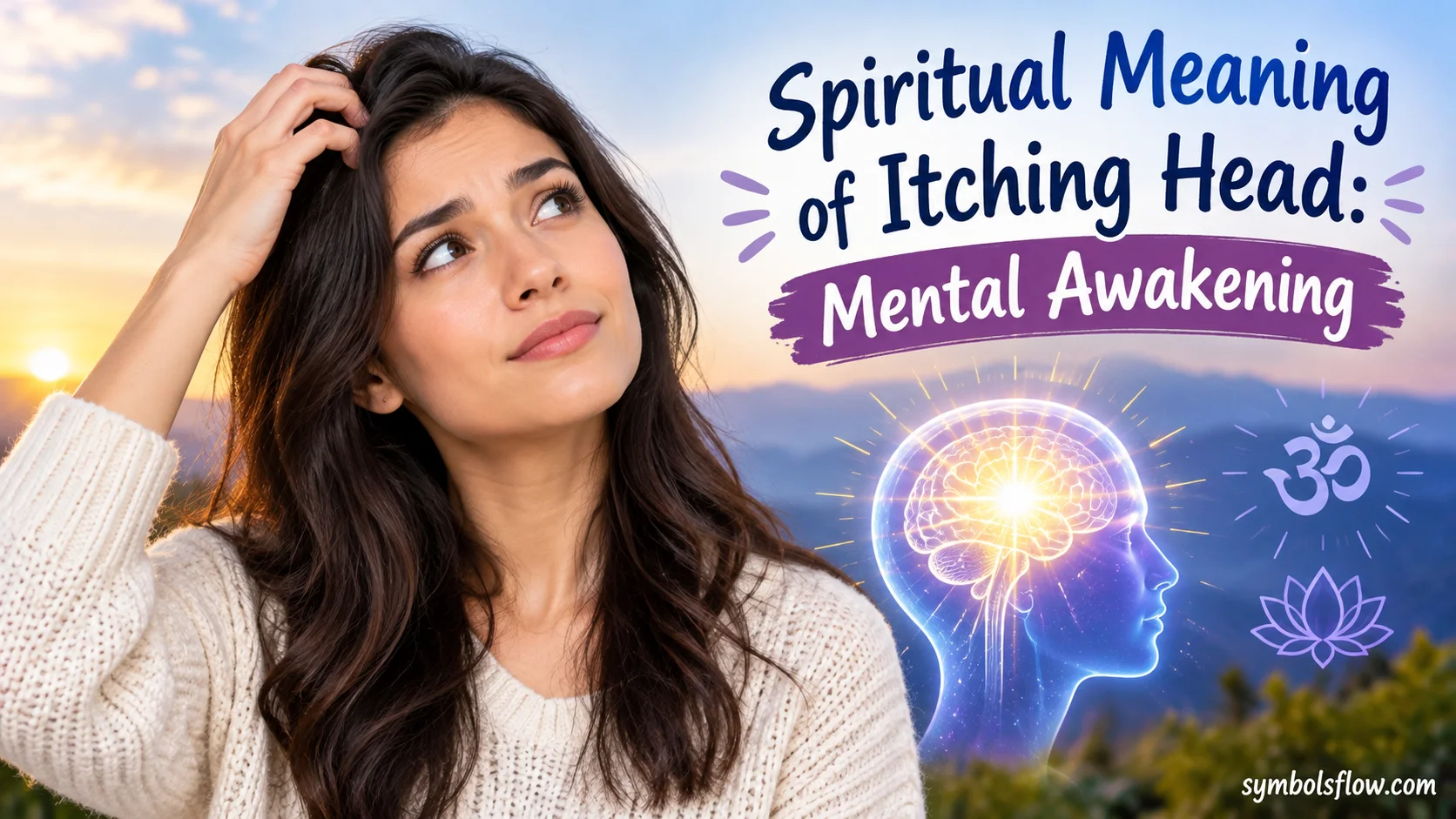
An itchy head can begin as an ordinary physical sensation, with an itch, itching, or persistent itch on the scalp.
A person may notice a strange scalp sensation or annoying sensation and first think about dry skin, product buildup, or another simple issue involving the skin. I have found that people often realize there may be more to what they are experiencing when an unusual feeling keeps drawing their attention. This is where the spiritual meaning of itching head can offer a deeper meaning for someone who sees body sensations as signs. The spiritual significance of head itching, scalp itching, or a persistent scalp itch may be connected with mental awakening, especially when the sensation seems to carry personal meaning beyond an annoying sensation.
In modern American spiritual culture, an itching head may be viewed through personal beliefs, meditation practices, or symbolic traditions. The spiritual meaning may point toward awareness, intuition, new ideas, or a shift in perspective. Because the head is closely connected with thought, identity, and decision-making, some people interpret an itchy head as a spiritual message linked to inner change. The spiritual significance of itching scalp can therefore become a personal symbolic meaning, rather than a fixed rule. Someone might feel that an unusual scalp sensation is asking them to notice something within their emotional experience, while another person could understand the same sensation differently. In this sense, the spiritual interpretation depends on cultural background, location, emotions, and individual interpretation.
“Let’s dive in!
Quick Answer
The spiritual meaning of itching head: mental awakening is commonly associated with new awareness, intuition, mental clarity, and personal transformation. In broader spiritual traditions, an itchy crown may also symbolize connection, reflection, or heightened attention to inner life.
TL;DR
- An itchy head can symbolize mental awakening and new awareness.
- The crown is often linked with spiritual connection and higher consciousness.
- Some traditions connect itching with intuition, change, or incoming news.
- American spiritual culture often treats sensations as prompts for reflection.
- Location and personal circumstances can change the symbolic interpretation.
- Physical causes can exist, so symbolism shouldn’t replace ordinary explanations.
What Does an Itching Head Symbolize?
An itching head is often interpreted as a signal to pay attention to your thoughts. Because the head is associated with thinking and awareness, an unusual sensation there can feel symbolically meaningful.
Today, spiritual interpretations commonly connect head itching with awakening, intuition, and mental movement. These ideas are symbolic rather than universal rules.
Common Symbolic Meanings
People may associate an itching head with:
• Mental awakening and fresh perspectives
• Increased awareness of personal thoughts
• Intuition becoming more noticeable
• A need to slow down and reflect
• Emotional tension seeking release
• A transition into a new phase
The strongest interpretation often comes from context. For example, an itch during meditation may feel different from one experienced during a stressful day.
Mental Awakening and New Awareness
Mental awakening is one of the most common modern interpretations of head itching. In this view, the sensation represents a mind becoming more observant and open to new possibilities.
Rather than predicting a specific event, the symbolism encourages attention. You may begin questioning old assumptions, noticing patterns, or considering ideas you previously overlooked.
A Symbol of New Thinking
An awakening can happen gradually. It may involve changing your priorities, questioning familiar habits, or becoming more aware of your emotional responses.
For some people, an itchy head becomes a symbolic reminder to pause. The physical sensation interrupts normal thinking and creates a moment of awareness.
Why the Head Matters
The head represents the mental world in many symbolic systems. It contains the brain and sensory organs, while the face and eyes communicate identity and attention.
Therefore, sensations around the head can easily become associated with thought, insight, and consciousness. This symbolic connection is especially strong in modern spirituality.
Crown of the Head and Spiritual Awakening
The crown has a special place in many spiritual interpretations. Modern chakra traditions associate the top of the head with the crown chakra, commonly called Sahasrara.
In these traditions, the crown chakra is linked with consciousness, spiritual connection, wisdom, and a sense of unity. Some modern practitioners therefore interpret tingling or itching around the crown as a sign of spiritual openness.
The Crown Chakra Connection
The crown chakra belongs to Indian religious and philosophical traditions that developed over long periods. Modern wellness culture often presents chakras as energy centers connected with different aspects of human experience.
An itchy crown is sometimes described as symbolic of opening awareness. However, this interpretation should be understood as a spiritual belief rather than a scientifically established cause.
What a Crown Itch May Represent
Symbolically, a crown itch may suggest:
• Openness to a new perspective
• Greater interest in spiritual questions
• A desire for inner peace
• Reflection about purpose and direction
• A feeling of expanded awareness
The meaning can be personal. One person may see the sensation as spiritual growth, while another may simply notice it and move on.
Itching on Different Parts of the Head
The location of an itch can influence its symbolic interpretation. Modern spiritual writers often assign different meanings to the crown, forehead, sides, and back of the head.
These associations aren’t universal. Instead, they provide a symbolic framework that some people use for reflection.
Symbolic Head Locations
| Head Location | Common Symbolic Meaning | Common Association | Interpretive Focus |
| Crown | Spiritual awakening | Higher awareness | Connection and insight |
| Forehead | Intuition | Inner knowing | Perspective and decisions |
| Sides | Communication | External influences | Listening and awareness |
| Back of head | Memory | Past experiences | Reflection and release |
| Entire head | Mental movement | New thoughts | Awareness and change |
Why Location Feels Important
People naturally search for patterns when unusual sensations occur. Location gives the experience another layer of meaning.
For example, an itch at the forehead may be connected symbolically with intuition because the forehead is often associated with the “third eye” in modern spiritual language.
Historical Roots of Head Symbolism
The head has carried symbolic importance for thousands of years. Ancient cultures frequently represented rulers, deities, and sacred figures with special crowns, hairstyles, marks, or head coverings.
Ancient Egyptian art provides clear examples. Royal crowns communicated political authority and connections with the kingdom. Other cultures used elaborate hairstyles and head ornaments to express status, identity, adulthood, or sacred roles.
Ancient Views of the Head
In many societies, the head was treated as more than an ordinary body part. It could represent identity, authority, wisdom, or spiritual status.
For example, ancient Egyptian royal imagery used distinctive crowns to communicate political power. In South Asian religious art, hair arrangements, forehead marks, crowns, and other head features could identify divine or spiritually important figures.
Hair and Sacred Identity
Hair also developed symbolic meanings in many cultures. It could represent strength, maturity, devotion, social position, or ritual status.
Because hair grows from the head, these meanings sometimes overlap with broader ideas about the sacred importance of the head itself.
The Spiritual Meaning of the Head in Indian Traditions
Indian spiritual traditions provide an important background for modern interpretations of head sensations. The crown chakra is commonly described as the highest major chakra in later chakra systems.
Its symbolism involves consciousness and spiritual realization. However, modern claims that a specific itch proves chakra activation are newer interpretations and shouldn’t be presented as universal teachings.
Crown and Consciousness
The lotus is frequently used in Indian religious imagery to represent spiritual development. Its movement from closed form to open bloom provides a powerful metaphor for awakening.
This symbolism helps explain why modern spiritual writers connect sensations at the crown with personal growth. The head becomes a symbolic meeting point between ordinary thought and higher awareness.
Read More: Rabbit’s Foot Spiritual Meaning: Luck and Protection
What Does an Itching Head Mean in American Spiritual Culture?
In the United States, spiritual interpretations often combine traditional ideas with personal reflection. People may encounter chakra concepts through meditation, yoga, wellness communities, books, podcasts, and social media.
As a result, an itchy head can be interpreted as a personal sign rather than a fixed religious message.
Modern American Interpretations
Common interpretations include:
• A reminder to become more mindful
• A period of personal transformation
• New ideas beginning to emerge
• Increased attention to intuition
• A need to examine stressful thoughts
• Curiosity about spiritual development
American spirituality is diverse, so no single interpretation represents everyone. Some people view these sensations spiritually, while others see them as ordinary bodily experiences.
Itching Head and Intuition
Another common interpretation connects head itching with intuition. Here, intuition means an immediate feeling or impression that appears without deliberate reasoning.
An itchy head may become meaningful when it happens during an important decision. The sensation can encourage someone to pause and examine what they already feel or know.
Listening to Inner Awareness
Symbolically, the itch can act like a small interruption. It draws attention away from routine thinking and toward the present moment.
This doesn’t mean the sensation predicts the future. Instead, its symbolic value can come from encouraging careful reflection.
Intuition Versus Prediction
Spiritual symbolism sometimes uses words such as “message,” “sign,” or “guidance.” These terms can mean different things to different people.
A balanced interpretation treats the experience as an opportunity for reflection rather than proof that a specific event will happen.
Itching Head and Emotional Energy
Head itching is also associated with emotional pressure in modern spiritual writing. The head represents thought, so an itch may be interpreted as symbolic of excessive thinking or unresolved concerns.
For some people, this symbolism becomes especially meaningful during major changes. Stress, uncertainty, excitement, and emotional conflict can all make people more attentive to bodily sensations.
Symbolic Emotional Associations
An itchy head may represent:
• Mental overload from too many competing thoughts
• A desire for emotional release
• Uncertainty about an important choice
• Frustration with an unresolved situation
• Excitement about a new possibility
These interpretations are best viewed as reflective tools. They don’t establish a spiritual cause for the physical sensation.
Itching Head and Personal Transformation
Transformation is another recurring theme. An itchy head can symbolize the beginning of a new mental chapter.
This interpretation fits experiences such as changing beliefs, learning something important, entering a new career, or developing a different understanding of yourself.
From Old Ideas to New Ones
Personal growth often involves letting go of familiar ideas. Therefore, an itchy head may be used metaphorically as a sign that your mental framework is changing.
The symbolism is less about the itch itself and more about what it makes you notice. That distinction keeps the interpretation personal rather than absolute.
Cross-Cultural and Spiritual Meanings
Beliefs about itching and bodily sensations appear in many forms around the world. However, the exact meaning varies widely.
Some folklore associates itching with visitors, money, news, luck, or changes in fortune. Other traditions connect bodily sensations with warnings, intuition, or spiritual attention.
Why Meanings Differ
Folklore develops through local history and shared storytelling. A belief that feels familiar in one community may be unknown elsewhere.
Therefore, it’s better to describe these interpretations as cultural traditions rather than universal spiritual laws.
Respecting Different Traditions
Modern spiritual content sometimes combines ideas from unrelated cultures. This can make interpretations sound more universal than they really are.
A respectful approach keeps traditions distinct. It also recognizes that a modern interpretation may be inspired by an older tradition without being identical to it.
Psychological Associations of Head Itching
The head has strong psychological symbolism because people associate it with thought, memory, identity, and decision-making.
When a physical sensation occurs there, it can naturally become part of a person’s emotional story. The sensation may draw attention to whatever was already occupying the mind.
The Power of Attention
A sudden itch interrupts concentration. That interruption can encourage someone to notice their thoughts.
For spiritual readers, this may feel like a meaningful pause. For others, it may simply demonstrate how closely attention and bodily awareness interact.
A Symbolic Pause
Instead of asking only, “What does this mean?” some people ask, “What was I thinking about when it happened?”
That question can reveal a personal connection without claiming that the sensation has one predetermined message.
Modern Uses in Social Media, Tattoos, and Decor
Spiritual symbolism has become highly visible in modern American lifestyle culture. Crown imagery, lotus flowers, halos, stars, and glowing head motifs frequently appear in spiritual artwork and online content.
An itchy-head concept can fit this visual language because it suggests awakening and invisible energy.
Popular Visual Themes
Common imagery includes:
• A glowing crown above the head
• Lotus flowers representing spiritual growth
• Soft light suggesting expanded awareness
• Stars symbolizing higher consciousness
• Head silhouettes surrounded by energy
These designs often communicate personal growth rather than membership in a specific religion.
Social Media Interpretations
Online communities can spread symbolic interpretations quickly. A personal experience may become a widely repeated belief within a short time.
That doesn’t necessarily make the interpretation historically traditional. It may instead reflect a newer form of digital spirituality shaped by individual experiences.
Misunderstandings and Changing Interpretations
One common misunderstanding is assuming that every itchy head has a spiritual explanation. Spiritual symbolism and physical experience are different categories.
An itch can have ordinary causes, including environmental irritation or changes affecting the scalp. Symbolic interpretation cannot establish why a physical sensation is occurring.
Avoiding Absolute Claims
Statements such as “an itchy head always means spiritual awakening” go beyond what symbolism can support.
A more careful interpretation is that some spiritual traditions and modern practitioners associate head itching with awakening, intuition, or energetic change.
When Meanings Become Commercialized
Online spirituality can sometimes turn complex traditions into simple formulas. For example, assigning one fixed meaning to every body location may make cultural ideas easier to consume.
However, historical traditions are usually more complicated. Meanings can change across periods, communities, and religious schools.
How the Meaning Has Changed Over Time
The symbolic importance of the head is ancient, but the specific idea that an itch represents mental awakening is much more modern.
Earlier traditions often emphasized authority, sacred identity, ritual status, wisdom, or spiritual connection. Modern interpretations increasingly focus on personal growth and individual awareness.
From Sacred Status to Personal Growth
Ancient imagery often used the head to identify rulers or sacred figures. Later spiritual movements placed greater emphasis on inner consciousness and personal transformation.
Today, an itchy head can therefore be interpreted through a highly personal lens. The experience becomes a small symbol within someone’s larger story of change.
A Modern Spiritual Language
Terms such as “energy,” “awakening,” and “intuition” are widely used in contemporary spiritual communities. They allow people to describe subjective experiences using a shared vocabulary.
Still, these terms can mean different things across traditions. Understanding that difference helps keep spiritual discussions respectful and grounded.
FAQs
Is an itchy head a sign of spiritual awakening?
Some modern spiritual traditions interpret an itchy crown as a symbol of awakening or increased awareness. However, this is a spiritual interpretation, not a universal rule.
What does an itchy crown mean spiritually?
An itchy crown is commonly associated with spiritual connection, awareness, intuition, or personal growth. The interpretation often comes from modern understandings of the crown chakra.
What does an itchy forehead mean spiritually?
An itchy forehead is sometimes connected with intuition, insight, and the third-eye concept. Its meaning varies between spiritual traditions and individual beliefs.
Does an itchy head mean someone is thinking about you?
Some forms of folklore associate itching sensations with another person’s attention or incoming news.
Is itching on the back of the head spiritually meaningful?
Some modern interpretations connect the back of the head with memories, the past, or unresolved experiences.
Conclusion:
The spiritual meaning of itching head: mental awakening centers on awareness, fresh thinking, intuition, and personal transformation. Modern spiritual communities often connect the crown with higher consciousness, while broader cultural traditions give the head meanings involving identity, authority, wisdom, and sacred status.

1 thought on “Spiritual Meaning of Itching Head: Mental Awakening”