
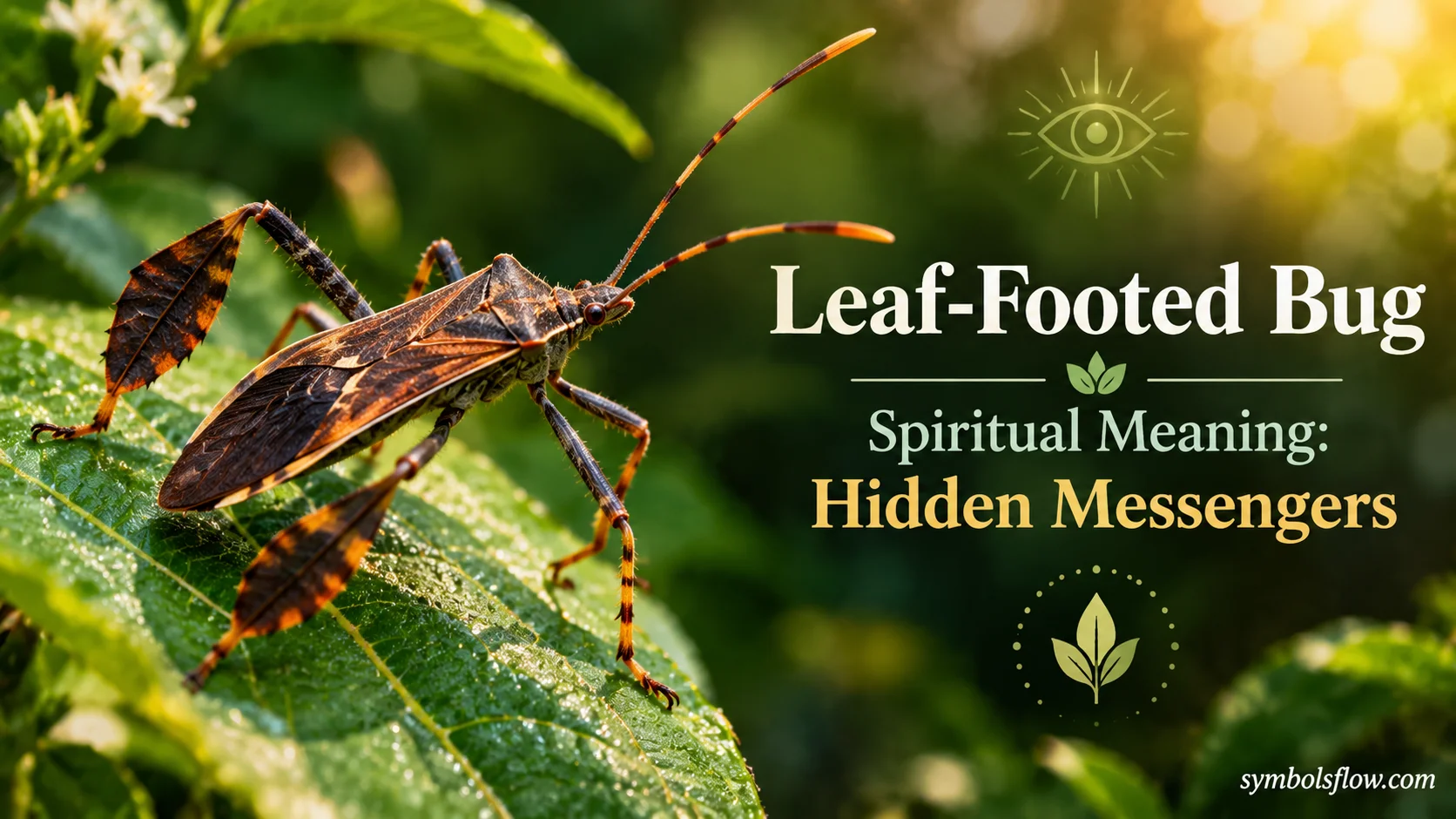
The Leaf Footed Bug Spiritual Meaning: Hidden Messengers explores the symbolic ideas people may connect with this unusual insect. With its leaf-shaped hind legs, long antennae, and quiet movements, the leaf-footed bug can inspire thoughts about adaptability, patience, awareness, and the messages hidden in everyday experiences. Although it may look ordinary at first, its appearance can encourage a closer look at nature.
In the United States, people often find insects in gardens, around windows, or on outdoor plants. Some see these encounters as simple parts of the natural world, while others use them as opportunities for personal reflection. Because spiritual symbolism depends on individual beliefs, the meaning of a leaf-footed bug isn’t fixed or universal.
However, its distinctive shape and survival habits offer several useful symbolic connections. Its leaf-like legs suggest blending in, while its ability to move through changing surroundings can represent flexibility. For readers interested in nature-based spirituality, this small insect can become a reminder to observe carefully, respect personal boundaries, and remain open to quiet lessons.
Rather than treating every encounter as a supernatural sign, it’s helpful to consider the insect’s behavior, your surroundings, and what the moment means to you.
“Let’s dive in!
Quick Answer
The leaf-footed bug spiritual meaning can symbolize hidden messages, adaptability, patience, and awareness in everyday American life. Spiritually, some people interpret an encounter as an invitation to slow down, notice overlooked details, and adjust to change with care.
TL;DR
- Leaf-footed bugs can symbolize adaptability and quiet awareness.
- Their leaf-like legs suggest camouflage, protection, and blending in.
- An unexpected encounter may inspire personal reflection and patience.
- In American gardens, these insects also represent ordinary natural processes.
- Spiritual meanings vary by personal belief and cultural context.
- Their presence isn’t proof of a supernatural message or warning.
1. What Is a Leaf-Footed Bug?
Leaf-footed bugs belong to the family Coreidae, a group of insects known for their distinctive body shapes and enlarged hind legs. Many species have flattened, leaf-like expansions on their back legs, which give the group its familiar name.
In the United States, these insects may appear on garden plants, trees, fruits, and other vegetation. Their appearance can be striking, but their behavior is best understood through their natural history before exploring possible symbolic meanings.
Recognizing Its Main Features
A leaf-footed bug often has an elongated body, long antennae, and narrow wings. Depending on the species, its coloring may include brown, green, gray, or reddish markings.
Its most recognizable feature is the flattened section of its hind legs. This unusual shape can inspire symbolic associations with leaves, camouflage, flexibility, and the connection between an organism and its environment.
Why Its Appearance Matters Symbolically
People frequently draw meaning from an animal’s appearance or behavior. For example, a creature that blends into foliage may suggest discretion, while one that moves between plants may inspire thoughts about adaptability.
These connections are interpretations rather than scientific conclusions. Still, they offer a simple way to reflect on personal experiences without assuming that every insect carries a predetermined message.
2. Leaf-Footed Bug Spiritual Meaning and Core Symbolism
The leaf-footed bug can represent several themes when viewed through a personal or spiritual lens. Its most common symbolic associations include hidden awareness, patience, and the ability to adapt without attracting unnecessary attention.
These meanings are especially relevant when someone encounters the insect unexpectedly and wants to reflect on why the moment felt memorable.
Hidden Messages and Quiet Awareness
Because leaf-footed bugs can blend into their surroundings, some people associate them with information that isn’t immediately obvious. An encounter may encourage you to look more carefully at a situation before reaching a conclusion.
This doesn’t mean a secret is definitely being revealed. Instead, the insect can serve as a personal reminder to listen closely, notice small changes, and avoid overlooking important details.
Adaptability and Patience
Leaf-footed bugs live among changing natural conditions, including shifting temperatures, available food, and seasonal changes. Symbolically, these qualities can represent flexibility and the value of responding thoughtfully rather than rushing.
Their quiet presence may also encourage patience. Sometimes, a clearer understanding develops through observation and time instead of immediate action.
Protection and Personal Boundaries
Camouflage offers another possible symbolic connection: knowing when to remain unnoticed. For people reflecting on relationships or personal challenges, the insect may represent the value of privacy, healthy boundaries, and choosing carefully when to share personal information.
However, keeping a low profile isn’t always the best response. The broader lesson is balance—understanding when to observe quietly and when to speak or act.
3. Historical Background and Ancient Roots
There is no widely established ancient religious tradition specifically assigning spiritual meanings to leaf-footed bugs. Their modern symbolism is better understood through broader human relationships with insects, plants, and the natural world.
Across history, people have interpreted animals through their behavior, appearance, and role in the environment. However, those general traditions shouldn’t be presented as direct evidence of a specific leaf-footed bug belief.
Early Connections Between Nature and Meaning
Ancient societies often used animals and plants in stories, religious art, seasonal customs, and moral teachings. Insects could represent fertility, destruction, transformation, persistence, or the relationship between humans and nature, depending on the creature and cultural setting.
Leaf-footed bugs, however, don’t have one well-documented, universal symbolic role across ancient civilizations. Their current spiritual interpretations are largely personal or modern extensions of broader nature symbolism.
From Folklore to Personal Reflection
As nature-based spirituality developed in different communities, ordinary encounters with wildlife became opportunities for individual reflection. Some people began interpreting the arrival of a bird, butterfly, beetle, or other insect as a prompt to consider a life situation.
Today, the leaf-footed bug can fit into this practice without needing an invented ancient origin. Its distinctive appearance and natural behavior provide enough inspiration for a personal symbolic reading.
4. Leaf-Footed Bug Symbolism in the United States
In the United States, leaf-footed bugs are most familiar as insects found around gardens, fruiting plants, trees, and homes. Their meaning therefore often begins with an ordinary outdoor encounter rather than a formal religious or national tradition.
American attitudes toward insects can vary widely. Some people appreciate their place in nature, while others see them mainly as garden visitors that need to be managed.
Gardens, Homes, and Everyday Encounters
For many Americans, the garden represents growth, care, seasonal change, and a connection to the outdoors. Finding a leaf-footed bug among plants can naturally prompt thoughts about patience and the balance of living systems.
If one appears near a window or door, a person who values spiritual symbolism might reflect on transitions, privacy, or paying attention to the home environment. These associations are personal interpretations, not established American folk beliefs.
A Modern Nature-Based Meaning
In contemporary American culture, nature often provides a language for discussing emotional well-being and personal development. A small insect can become a useful reminder to slow down during a busy day.
Possible American-context interpretations include:
- Personal growth: Allowing change to happen at a natural pace.
- Awareness: Looking beyond a first impression.
- Resilience: Adjusting when familiar circumstances change.
- Balance: Respecting the needs of people and the environment.
- Privacy: Recognizing when to observe before responding.
These themes aren’t unique to the United States, but they fit comfortably within modern American interest in gardening, mindfulness, and personal reflection.
5. Cross-Cultural and Spiritual Interpretations
Animal symbolism differs across cultures, spiritual traditions, and individual belief systems. Although some traditions assign particular meanings to insects, those meanings shouldn’t automatically be transferred to the leaf-footed bug.
A respectful interpretation distinguishes established cultural practices from modern personal symbolism. This helps avoid presenting a personal impression as a universal spiritual rule.
Nature-Based Spirituality
Some people who follow nature-centered spiritual practices see encounters with animals as opportunities to consider their relationship with the environment. In that setting, the leaf-footed bug might represent observation, adaptation, or the importance of small details.
However, not every nature-based tradition uses the same symbols. The meaning depends on the specific tradition, its teachings, and the person’s own experience.
Personal Spiritual Reflection
For someone who doesn’t follow an organized tradition, the insect can still offer a meaningful moment. Its unusual legs, quiet movements, and connection to foliage may prompt thoughts about fitting in, responding to change, or protecting one’s energy.
There is no need to claim that the insect carries an objectively verified message. A personal interpretation can be valuable simply because it helps someone think more clearly about their choices.
Read More: Left Eye Stye Spiritual Meaning: Inner Conflict Revealed
6. What Does Seeing a Leaf-Footed Bug Mean Spiritually?
Seeing a leaf-footed bug may feel significant when it appears during a period of uncertainty or change. However, the meaning depends on your circumstances, personal beliefs, and the feelings the encounter brings up.
Rather than looking for one fixed explanation, consider what was happening when you noticed it. The setting may help you connect the moment with a useful personal lesson.
Seeing One Unexpectedly
An unexpected encounter can symbolize a moment of awareness in a personal reflection practice. You might take it as a reminder to pause, reconsider an assumption, or notice something you previously overlooked.
For example, if you’ve been rushing through an important decision, the bug’s quiet presence might inspire you to slow down. This interpretation can be helpful without assuming that the encounter predicts a future event.
Seeing One Repeatedly
Repeated encounters can attract attention, especially when the insect appears in several places. Spiritually, you might use these moments to revisit a theme such as patience, boundaries, or adaptability.
At the same time, repeated sightings may have a straightforward explanation. Seasonal activity, nearby plants, and access to food or shelter can influence where these insects appear.
Seeing One During a Difficult Period
When life feels uncertain, an encounter may become a symbol of resilience. The insect can remind you that adapting to difficult circumstances doesn’t always require dramatic action.
Sometimes, a small change in perspective is enough to help you move forward. Let the experience encourage thoughtful reflection rather than fear or the expectation of an unavoidable outcome.
7. Leaf-Footed Bug Spiritual Meaning in the House
Finding a leaf-footed bug inside your home can raise questions about whether its presence has a deeper meaning. In personal spirituality, a house often represents comfort, privacy, security, and the inner life.
Because of this association, some people interpret an indoor encounter as a reminder to examine their personal space or emotional boundaries. However, no universal spiritual tradition establishes that a leaf-footed bug entering a house predicts a particular event.
Symbolism of Home and Protection
A home can represent the place where you recover, think, and spend time with people you trust. Therefore, the insect’s appearance may inspire reflection about whether your surroundings feel peaceful and supportive.
You might consider these symbolic possibilities:
- Personal space: Reflecting on whether your boundaries are respected.
- Inner awareness: Paying attention to feelings you’ve been setting aside.
- Adaptability: Adjusting to changes in your household or routine.
- Peace and patience: Responding calmly to an unexpected situation.
These are optional interpretations, not warnings. If the insect is inside, gently guiding it outdoors may be enough.
Practical Reasons for Indoor Encounters
Leaf-footed bugs may enter homes accidentally while searching for shelter or moving between outdoor areas. Gaps around doors, windows, and screens can provide entry points.
Therefore, an indoor sighting doesn’t automatically mean that your home has negative energy. Practical observation and personal reflection can exist together without treating ordinary insect behavior as a supernatural event.
8. Emotional and Psychological Meaning
An insect encounter can become emotionally meaningful because people naturally connect their experiences with current thoughts and feelings. The leaf-footed bug’s unusual appearance may draw attention to themes of caution, privacy, and adaptation.
Psychologically, the meaning often comes from the person interpreting the encounter rather than from a hidden message carried by the insect itself.
What the Encounter May Bring to Mind
Different people may respond to the same insect in different ways. Someone who enjoys gardening might feel curious, while another person might feel uneasy or surprised.
Your emotional reaction can offer a starting point for reflection:
- Curiosity may encourage closer observation.
- Calmness may strengthen your appreciation of nature.
- Surprise may remind you to remain flexible.
- Discomfort may reveal a need for reassurance or distance.
- Wonder may encourage gratitude for everyday details.
These reactions aren’t diagnostic signs of a particular emotional state. Instead, they can help you understand what the experience personally brings to mind.
The Value of Mindful Observation
Mindfulness involves noticing the present moment without immediately judging it. Watching an insect move across a leaf can provide a simple opportunity to practice that approach.
Rather than asking whether the encounter predicts something, consider what you notice and how you feel. This can turn a brief outdoor experience into a calm moment of self-awareness.
9. Leaf-Footed Bug as a Messenger of Change
The idea of a hidden messenger is central to this topic’s modern spiritual interpretation. Because the leaf-footed bug resembles the foliage around it, it can serve as a metaphor for lessons that are easy to miss.
However, being a messenger is a symbolic role, not a scientifically established property of the insect. The value comes from the reflection its presence inspires.
Recognizing Small Signs of Change
Life changes often begin with small developments rather than dramatic events. A conversation, a new responsibility, or a shift in your priorities may gradually reveal that something needs attention.
In this context, the leaf-footed bug can symbolize noticing those early changes. Its appearance may encourage you to ask whether a situation deserves a closer look before you make a decision.
How to Reflect on a Possible Message
You don’t need a complicated ritual to explore the meaning of an encounter. A few simple questions can help you connect the experience with your life.
- What was I thinking about when I noticed the insect?
- Is there a situation that requires greater patience?
- Have I overlooked an important detail recently?
- Would adapting my approach make a challenge easier?
- Am I protecting my privacy while remaining open to others?
There is no required answer to these questions. Their purpose is to support thoughtful self-reflection, not to prove that a supernatural message has arrived.
10. Leaf-Footed Bug Symbolism in Dreams
Dreams sometimes include animals and insects that reflect recent experiences, memories, or personal concerns. If a leaf-footed bug appears in a dream, its meaning may depend on the setting and your emotional response.
There is no universally accepted dream interpretation specifically for this insect. Still, its physical features can provide a starting point for exploring personal associations.
Common Symbolic Dream Themes
A leaf-footed bug blending into a plant might bring to mind something overlooked or a desire for privacy. An insect moving across a leaf could suggest adapting to change or paying closer attention to your surroundings.
If the bug makes you uncomfortable in the dream, consider whether a recent situation has left you feeling uncertain. However, a frightening dream doesn’t establish that danger is approaching.
Understanding the Dream in Context
The details of the dream matter more than a single symbolic definition. Think about where the insect appeared, what it did, and how you felt when you saw it.
You can write down those details and consider whether they connect with recent experiences. Treat the interpretation as a personal possibility rather than a prediction or an absolute explanation.
11. Modern Uses in Tattoos, Art, and Personal Identity
Leaf-footed bugs aren’t as widely recognized in popular culture as butterflies, bees, or dragonflies. Nevertheless, their unusual shape can make them interesting subjects for nature-inspired art and personal symbolism.
In modern American culture, an insect design may express an appreciation for wildlife, a fascination with unusual creatures, or an interest in the details people often overlook.
Tattoos and Nature-Inspired Art
Someone choosing a leaf-footed bug tattoo might connect it with patience, adaptation, or quiet resilience. Another person might simply appreciate its leaf-shaped legs and distinctive appearance.
Possible artistic approaches include:
- A realistic insect resting on a leaf.
- A fine-line illustration emphasizing the legs and antennae.
- A botanical design combining the insect with garden foliage.
- A minimalist outline representing awareness and adaptability.
- A nature-themed composition celebrating overlooked wildlife.
These are creative possibilities rather than established tattoo meanings. The most meaningful design is one that reflects the wearer’s own intentions.
Social Media and Everyday Expression
Nature photography and wildlife videos allow people to share unusual insect encounters with a wider audience. A leaf-footed bug may become a subject for curiosity, educational posts, or personal reflections about the natural world.
Someone might describe an encounter as a reminder to slow down or notice small details. Such expressions communicate personal meaning without establishing a universal belief about the insect.
12. Misunderstandings, Negative Associations, and Meaning Shifts
Spiritual interpretations can become confusing when personal beliefs are presented as universal facts. The leaf-footed bug is a useful example because its symbolism is less firmly established than that of many familiar animals.
Understanding this distinction helps readers explore spiritual ideas without unnecessary fear or misleading claims.
Does a Leaf-Footed Bug Mean Bad Luck?
There is no reliable evidence that seeing a leaf-footed bug causes bad luck or predicts misfortune. Although some people feel uncomfortable around insects, that reaction doesn’t make the encounter a negative spiritual sign.
Instead, you can interpret the moment neutrally or use it as an opportunity to reflect. The insect’s presence alone doesn’t establish that anything good or bad will happen.
Are Leaf-Footed Bugs Always Positive Symbols?
Not necessarily. Some people may associate camouflage with secrecy or avoidance, while others see it as protection and adaptability.
Neither interpretation is universally correct. Context, personal experience, and individual beliefs influence how the insect is understood.
Separating Symbolism From Scientific Facts
The insect’s biological role should remain distinct from its possible spiritual meaning. Leaf-footed bugs feed on plants, seeds, or fruits, depending on the species, and some can damage garden produce.
They aren’t supernatural warnings, and their appearance doesn’t prove that someone is hiding information from you. A balanced interpretation respects both the natural world and the freedom to find personal meaning in it.
13. Leaf-Footed Bug Meanings at a Glance
The same encounter can suggest different ideas depending on where it happens and how a person interprets it. The following table summarizes common personal associations while distinguishing them from established scientific facts.
| Context | Possible Symbolic Meaning | Common Association | Helpful Reflection |
| Garden encounter | Growth and adaptability | Nature and change | What can I learn from my surroundings? |
| Inside the house | Privacy and personal boundaries | Home and security | Does my space feel comfortable? |
| Unexpected sighting | Awareness and attention | Hidden details | What deserves a closer look? |
| Repeated sightings | Patience and observation | Recurring experiences | Am I noticing a practical pattern? |
| Dream encounter | Personal uncertainty or change | Memories and emotions | What feelings did the dream bring up? |
| Nature-inspired artwork | Individuality and resilience | Wildlife appreciation | What personal value does this creature represent? |
These associations are reflective tools, not rules. You can choose the interpretation that feels useful while remaining open to ordinary explanations.
FAQs
1. What does a leaf-footed bug symbolize spiritually?
A leaf-footed bug may symbolize adaptability, patience, quiet awareness, and the importance of noticing overlooked details. These meanings come from personal interpretation rather than a single established spiritual tradition.
2. Is seeing a leaf-footed bug a good sign?
Some people interpret the encounter positively as a reminder to stay observant and flexible. However, there is no evidence that seeing one predicts good fortune or a specific future event.
3. What does it mean when a leaf-footed bug enters your house?
Symbolically, you might connect an indoor encounter with privacy, home life, or personal boundaries. In practical terms, the insect may simply have entered through an opening while seeking shelter or moving around.
4. Why do I keep seeing leaf-footed bugs?
Repeated sightings may inspire reflection on patience or awareness if those themes feel relevant to you. However, nearby plants, seasonal activity, and accessible shelter can also explain why the insects appear frequently.
5. What does a leaf-footed bug mean in a dream?
It may represent something you feel you’ve overlooked, a need for flexibility, or a personal concern. Dream meanings aren’t universal, so consider the setting and your emotions rather than relying on a fixed interpretation.
Conclusion
The Leaf Footed Bug Spiritual Meaning: Hidden Messengers offers a thoughtful way to explore adaptability, patience, privacy, and awareness through an ordinary encounter with nature. Its leaf-shaped legs and quiet presence provide natural inspiration for reflecting on details that might otherwise go unnoticed.
In the United States, this insect is primarily a part of the natural world, especially around gardens and plants. Its spiritual meaning, when someone chooses to explore one, depends on personal beliefs and life experiences rather than a universal set of rules.

1 thought on “Leaf-Footed Bug Spiritual Meaning: Hidden Messengers”