
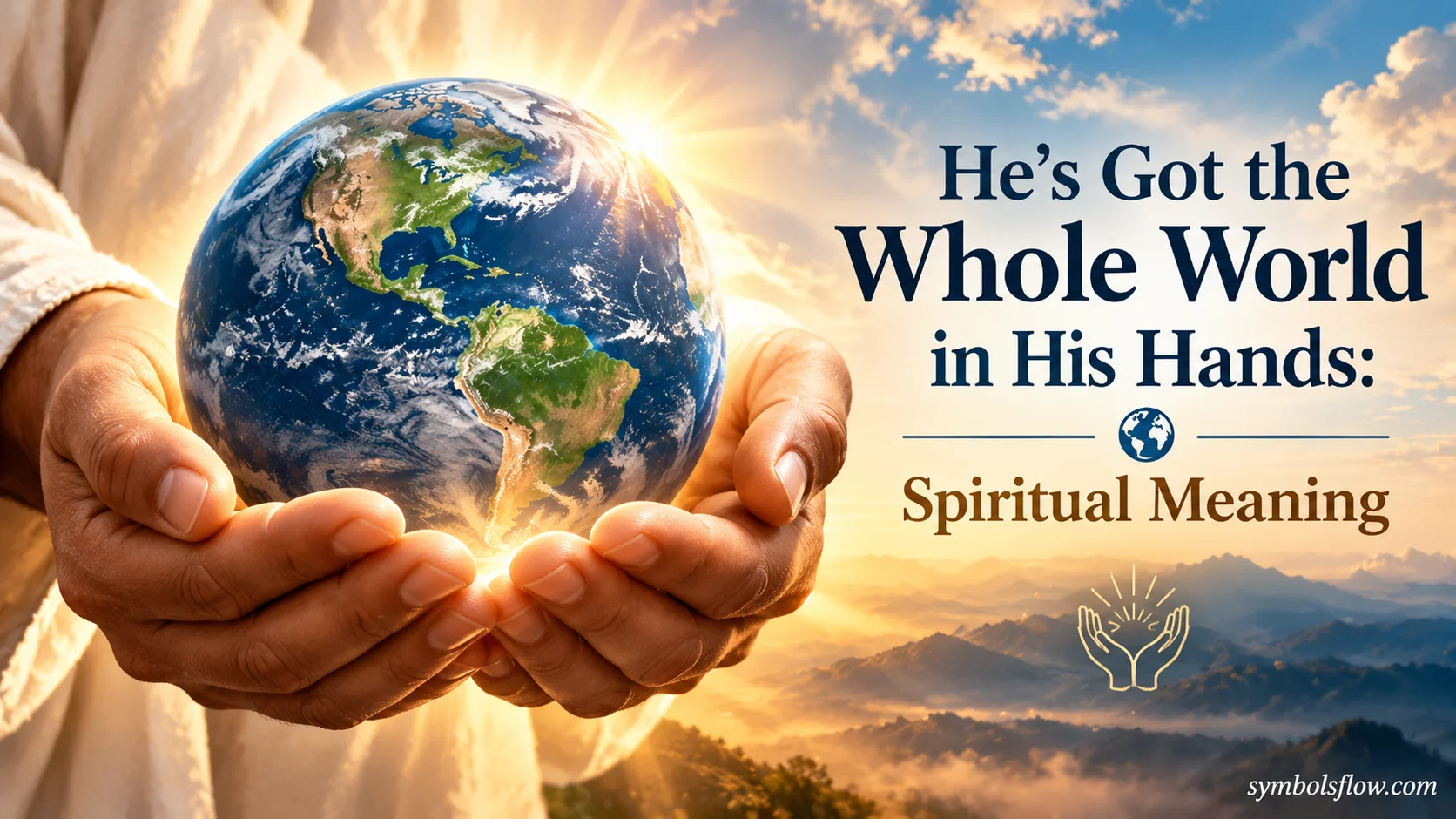
The spiritual meaning of He’s Got the Whole World in His Hands centers on divine care, protection, trust, and the belief that no part of creation exists beyond God’s awareness. For many Americans, this familiar phrase brings comfort during difficult times and reminds them that life can hold meaning even when circumstances feel uncertain.
The phrase is best known through the traditional African American spiritual of the same name. Its simple message has traveled through churches, family gatherings, schools, recordings, and popular culture. Today, people may encounter it during worship, while reflecting on personal struggles, or when searching for a message of peace and hope.
However, the meaning can reach beyond a single religious setting. Christians often understand the song as an expression of God’s sovereignty and loving presence. Others appreciate its message of unity, responsibility, and the importance of caring for the world. Understanding its history and symbolism helps explain why this simple song continues to speak to different generations.
“Let’s dive in!
Quick Answer
The spiritual meaning of He’s Got the Whole World in His Hands in the United States is primarily associated with God’s power, loving protection, and care for all creation. It also represents hope during hardship, trust in uncertain times, and the idea that every person belongs to a larger, connected world.
TL;DR
- Divine protection: God holds creation within His care.
- Faith and trust: The song encourages confidence during uncertain times.
- Hope and comfort: Its message offers reassurance through hardship.
- Human connection: Everyone belongs to a shared world.
- African American spiritual heritage: The song carries a meaningful religious and cultural history.
- Modern relevance: Its message inspires reflection, compassion, and responsibility toward others.
1. Overview of the Spiritual Meaning
The song expresses the belief that God holds the world and everything within it. For American Christians, this image offers a simple way to understand divine authority, care, and the relationship between humanity and creation.
Rather than suggesting that people control every event, the message encourages trust in a power greater than themselves. It can remind listeners that uncertainty doesn’t necessarily mean they have been abandoned.
What Does the Phrase Represent?
The phrase carries several connected meanings:
- Divine sovereignty: God has power over creation and its unfolding story.
- Loving care: People and living things remain worthy of attention and compassion.
- Spiritual reassurance: Faith can provide comfort when answers aren’t immediately available.
- Shared belonging: Humanity exists within one world, despite differences in background or belief.
The Symbol of Hands Holding the World
Hands are powerful symbols because they represent both strength and tenderness. In this song’s central image, the hands don’t simply grasp the Earth; they hold it.
That distinction matters. A tight fist may suggest control or force, while open hands can suggest protection, generosity, and care. When the Earth rests within them, the image becomes a reminder of responsibility as well as power.
2. Historical Background of the Spiritual
To understand the song’s meaning, it’s important to consider the African American spiritual tradition from which it emerged. These songs developed within Black communities shaped by slavery, religious faith, hardship, community life, and the struggle for freedom.
Spirituals often combined biblical themes with emotional expression and shared musical traditions. They offered ways to worship, preserve hope, and communicate experiences that ordinary conversation couldn’t always express.
Roots in African American Religious Life
African American spirituals developed over generations, especially during the period of slavery in the United States. Their musical and religious roots reflect complex interactions between African cultural traditions and Christianity.
Many spirituals draw on biblical stories about deliverance, divine judgment, suffering, and the promise of freedom. They also became important expressions of community identity and resilience.
However, their histories aren’t all identical. Some spirituals have documented origins, while others developed through oral traditions that make exact authorship and dating difficult to establish.
When Did the Song Become Popular?
“He’s Got the Whole World in His Hands” became widely known through twentieth-century recordings and performances. American audiences encountered it through gospel music, popular recordings, and group singing.
The song became especially recognizable because of its repeating refrain and straightforward lyrics. These features helped children, church congregations, and wider audiences learn it quickly.
Its exact origin and original authorship are not firmly established. Therefore, it’s more accurate to place it within the broader tradition of African American spirituals than to assign it a definite inventor or creation date without reliable evidence.
3. Biblical Connections and Christian Symbolism
For Christians, the song’s central idea connects with biblical teachings about God’s relationship with creation. The image of the world resting in divine hands expresses a belief that God is powerful, present, and attentive to life.
The song itself isn’t a Bible verse. Instead, its message reflects themes found throughout the Bible, particularly passages about creation, providence, and trust.
God as Creator and Sustainer
Genesis describes God as the creator of the heavens and the Earth. This foundational story supports the Christian understanding that the world belongs to God rather than existing entirely through human power.
Other biblical passages describe God as sustaining creation and remaining aware of human life. Psalm 95:4–5, for example, presents the depths of the Earth and the heights of the mountains as belonging to God.
Likewise, Colossians 1:16–17 describes all things as created through Christ and held together in Him. Christians may connect these teachings with the song’s picture of a world safely held in divine care.
Trust During Difficult Times
The song also echoes biblical invitations to trust God when circumstances become confusing. Its repeated words can feel like a simple statement of faith when someone is struggling to find reassurance.
However, this doesn’t mean faithful people never experience grief, fear, or doubt. Rather, the song offers one way of expressing trust while acknowledging that life remains beyond complete human control.
4. Spiritual Meaning in the United States
In the United States, the song has a distinctive place in church life, family traditions, children’s music, and American cultural memory. Its familiar refrain allows people to connect a large spiritual idea with an image they can easily understand.
At the same time, the song’s meaning varies with the setting. A church congregation may hear a declaration of faith, while a family may associate it with childhood memories and comfort.
Churches and Community Gatherings
Many American congregations use familiar spiritual songs to bring people together. The repeating structure of this song makes it especially suitable for group participation.
Its message can also serve as a reminder that religious community involves more than individual belief. People sing together, support one another, and express hope through shared traditions.
American Family and Childhood Memories
For many Americans, the song is connected with Sunday school, children’s programs, school performances, or family singing. These experiences can give the phrase a personal meaning that extends beyond its lyrics.
The song may recall a grandparent’s faith, a childhood church, or a moment when someone offered reassurance. Consequently, its symbolism can combine religious conviction with feelings of home, belonging, and continuity.
5. Symbolism of God’s Hands Holding the Earth
The central image is simple: the world rests within God’s hands. Yet each part of that image contributes to its deeper meaning.
Hands can symbolize action, authority, healing, and generosity. The Earth represents creation, humanity, nature, and the shared home of all living beings.
Hands as Protection and Strength
In religious art, hands often represent the presence or action of a divine figure. A hand reaching toward someone can suggest guidance, while a hand raised in blessing can represent favor or peace.
In this song, the hands suggest that creation is neither forgotten nor insignificant. They symbolize a power capable of holding the whole world without losing sight of its smallest parts.
The Earth as a Sign of Unity
The globe is a familiar symbol of the planet and humanity’s shared home. When held in caring hands, it can represent the connection between people, nature, and spiritual responsibility.
The image may also challenge the idea that one nation, community, or individual owns the world. Instead, it invites reflection on what people share and what they owe to one another.
Understanding the Main Symbols
| Symbol | Common Spiritual Meaning | Modern Association |
| Open hands | Protection, generosity, and care | Support and compassion |
| The Earth | Creation and shared belonging | Global connection |
| Holding or carrying | Responsibility and preservation | Caring for people and nature |
| Repeated lyrics | Steady faith and reassurance | Community singing and remembrance |
| The whole world | Divine authority and universal care | Unity across differences |
6. Cross-Cultural and Broader Spiritual Meanings
Although the song belongs to a Christian musical tradition, its central image can connect with broader ideas about care and responsibility. Different religious and philosophical traditions understand the relationship between the divine, the natural world, and humanity in different ways.
These similarities should be approached carefully. A shared image doesn’t mean that all traditions teach the same beliefs or assign identical meanings to it.
Religious Views of Creation
Christianity often describes God as the creator and sustainer of the world. Other religious traditions also recognize sacred relationships between a higher power, the natural world, and human life, though their teachings differ.
Some people may therefore connect the image of the Earth in caring hands with reverence for creation. Others may see it as a reminder to protect vulnerable people and respect the natural environment.
A Broader Message of Interconnection
Outside formal religious settings, the song can inspire reflection on humanity’s shared home. People who don’t interpret it literally may still appreciate its emphasis on compassion and belonging.
However, its historical identity remains important. The song shouldn’t be separated from its African American spiritual heritage simply because its message can appeal to a broad audience.
Read More: Leaf-Footed Bug Spiritual Meaning: Hidden Messengers
7. Emotional and Psychological Associations
Familiar songs can carry emotional meaning through repetition, memory, melody, and shared experiences. For many listeners, this song offers a feeling of reassurance because it presents a complicated world through a simple, steady image.
Its emotional effect depends on personal history. Someone may feel peaceful while singing it, while another person may associate it with grief, childhood, or a meaningful religious gathering.
Comfort During Uncertainty
The phrase can provide a sense of perspective when life feels unpredictable. Instead of promising that every problem will disappear, it expresses the belief that people aren’t required to understand or control everything.
For a person of faith, that idea may reduce feelings of isolation. For another listener, it may simply encourage patience and remind them to seek support from others.
Hope, Belonging, and Resilience
The song’s repeated refrain can strengthen a feeling of shared participation. Singing the same words with others may help people feel connected to a community that holds familiar values.
Its message can also support resilience by encouraging people to face difficulties without assuming that hardship defines their entire lives. Still, the song doesn’t replace practical help, emotional support, or action when problems require them.
8. Modern Uses in Music, Art, and Everyday Life
Today, the phrase appears in musical performances, religious reflections, educational settings, and creative artwork. Its recognizable image also lends itself to illustrations showing the Earth resting in open hands.
Modern interpretations may emphasize traditional Christian faith, global unity, environmental care, or a sense of personal comfort. The context usually determines which meaning stands out most.
Art, Illustrations, and Home Decor
An image of hands holding a globe may appear in faith-inspired prints, classroom displays, community projects, or environmental artwork. Soft blue and green colors often make the Earth recognizable, while golden light may suggest hope or sacredness.
In a home or worship space, such artwork can express a belief in divine care. In a community center, the same image might emphasize shared responsibility and concern for the planet.
Social Media and Digital Sharing
People may share the phrase or a related illustration when offering encouragement during uncertain times. Others may use it to express gratitude, faith, or concern for people affected by conflict and disaster.
However, a short caption can’t communicate every part of the song’s history. When sharing it publicly, acknowledging its African American spiritual roots helps preserve its cultural context.
Music and Public Performances
The song’s repeating structure makes it suitable for group singing and musical arrangements. Performers may adapt the tempo, instrumentation, and vocal style while retaining the central message.
These changes can introduce the song to new audiences. Nevertheless, thoughtful performances recognize that the piece comes from a living cultural and religious tradition, not merely from a catchy melody.
9. Environmental Meaning and Responsibility for the World
The image of the whole world resting in God’s hands can inspire reflection on humanity’s relationship with nature. For many Christians, creation is a gift that deserves gratitude, respect, and responsible care.
This interpretation connects spiritual belief with everyday choices. Rather than treating the Earth as something people can use without limits, it encourages a sense of stewardship.
Caring for Creation
Stewardship means looking after something entrusted to one’s care. In Christian discussions, it often refers to responsible treatment of natural resources, animals, and the environment.
The song doesn’t directly provide environmental instructions. However, its image can remind listeners that the world is precious and that human actions affect other living things.
From Faith to Everyday Action
For some people, the message inspires practical expressions of care:
- Protecting local parks and natural spaces.
- Reducing waste and using resources thoughtfully.
- Supporting neighbors during difficult circumstances.
- Teaching children to respect living things.
- Helping communities affected by disasters or environmental damage.
These actions aren’t the song’s only possible interpretation. Still, they show how a spiritual image can encourage responsibility beyond personal feelings.
10. Misunderstandings and Common Misinterpretations
The song’s simplicity can sometimes lead people to interpret its message too narrowly. Understanding what it expresses, and what it doesn’t promise, helps preserve its deeper meaning.
For many Christians, the song expresses trust in God rather than a guarantee of an easy life. This distinction matters when people face suffering, uncertainty, or unanswered questions.
Does the Song Mean Everything Will Go Perfectly?
Not necessarily. Believing that God holds the world doesn’t mean that painful events won’t happen or that every prayer will receive the expected answer.
Instead, many believers understand the message as an invitation to trust amid uncertainty. That interpretation allows faith to coexist with grief, questions, and the need for practical help.
Is the Song Only for Christians?
Historically, the song is rooted in Christian spiritual music. Its religious meaning should remain central when discussing its origins and traditional use.
However, listeners outside Christianity may appreciate its emotional themes. They might connect with its ideas of unity, care, and shared responsibility without adopting its theological claims.
Does the Image Suggest That Humans Have No Responsibility?
The image doesn’t have to mean that people should remain passive. Many Christian interpretations connect trust in God with caring for neighbors, helping those in need, and acting responsibly.
Consequently, the idea of divine protection can coexist with human responsibility. Faith may encourage action rather than serve as a reason to ignore suffering.
11. How the Song’s Meaning Has Evolved
The phrase has remained recognizable even as audiences and musical settings have changed. Its continued use reflects the strength of a message that can be expressed through both traditional worship and contemporary creative work.
However, its changing reach shouldn’t obscure its original cultural setting. The song’s popularity among broader audiences is part of its history, but its African American spiritual heritage remains essential to understanding it.
From Community Tradition to Wider Recognition
African American spirituals developed within communities where religious expression, music, and shared experience were closely connected. Over time, recordings and performances introduced many of these songs to audiences far beyond their original communities.
“He’s Got the Whole World in His Hands” became familiar across generations partly because its words are easy to remember. Its repetitive form also makes it adaptable to different voices and arrangements.
Contemporary Interpretations
Today, listeners may emphasize different aspects of the song. Some focus on God’s sovereignty, while others highlight comfort, unity, or responsibility toward the planet.
These interpretations can exist alongside one another, provided they don’t erase the song’s history. A modern illustration or performance can offer a new perspective while still respecting the tradition from which the song emerged.
12. How to Reflect on the Song’s Spiritual Message
Reflecting on the song doesn’t require a complicated ritual or a single correct interpretation. Its central image can provide a starting point for considering faith, uncertainty, gratitude, and the way people treat others.
For religious listeners, reflection may involve prayer or reading biblical passages about creation and trust. For others, it may involve thinking about community, responsibility, or the support they receive from loved ones.
Questions for Personal Reflection
Consider these questions when the song feels meaningful to you:
- Where do I need more trust or reassurance in my life?
- What helps me feel connected to something larger than myself?
- How can I show care for people who are struggling?
- What responsibilities do I have toward my community?
- What parts of life am I trying to control completely?
There are no universal answers to these questions. Their value lies in helping you connect the song’s message with your own experiences and values.
Connecting Spiritual Meaning With Daily Life
The song can serve as a reminder to pause when circumstances feel overwhelming. Rather than expecting certainty about every outcome, you can focus on what deserves your attention today.
For a person of faith, this might mean prayer, worship, or renewed trust in God. For someone drawn to its broader message, it might mean practicing kindness and taking small steps toward a more caring community.
FAQs
1. What does “He’s Got the Whole World in His Hands” mean spiritually?
Spiritually, the song expresses the belief that God holds all creation within His power and care. It also represents trust, hope, and reassurance during difficult or uncertain times.
2. Is “He’s Got the Whole World in His Hands” a Bible verse?
No, the phrase comes from a traditional Christian spiritual rather than a direct Bible quotation. However, its message reflects biblical themes about God as creator and sustainer, including ideas found in Genesis and the Psalms.
3. What is the origin of “He’s Got the Whole World in His Hands”?
The song belongs to the African American spiritual tradition. Its exact original author and date of composition aren’t firmly established, but it became widely known through twentieth-century performances and recordings.
4. Why does the song bring comfort to many people?
Its familiar melody, repeated words, and reassuring message can create a sense of peace and belonging. Personal memories of church, family, or community singing may also strengthen its emotional meaning.
5. What does the image of God holding the Earth symbolize?
The image commonly represents divine protection, authority, and care for creation. More broadly, it can remind people of humanity’s shared home and the importance of treating others and the natural world responsibly.
Conclusion
The spiritual meaning of He’s Got the Whole World in His Hands centers on divine care, trust, protection, and the belief that all creation matters. Rooted in the African American spiritual tradition, the song has become a familiar expression of faith and reassurance for many Americans. Its simple image of hands holding the Earth continues to communicate a powerful message across generations.
However, the song’s meaning isn’t limited to the promise of comfort. It can also inspire gratitude, connection, and responsibility toward people and the world we share. Its message doesn’t suggest that life will always be easy; instead, it offers a way to approach uncertainty with hope.

1 thought on “He’s Got the Whole World in His Hands: Spiritual Meaning”