
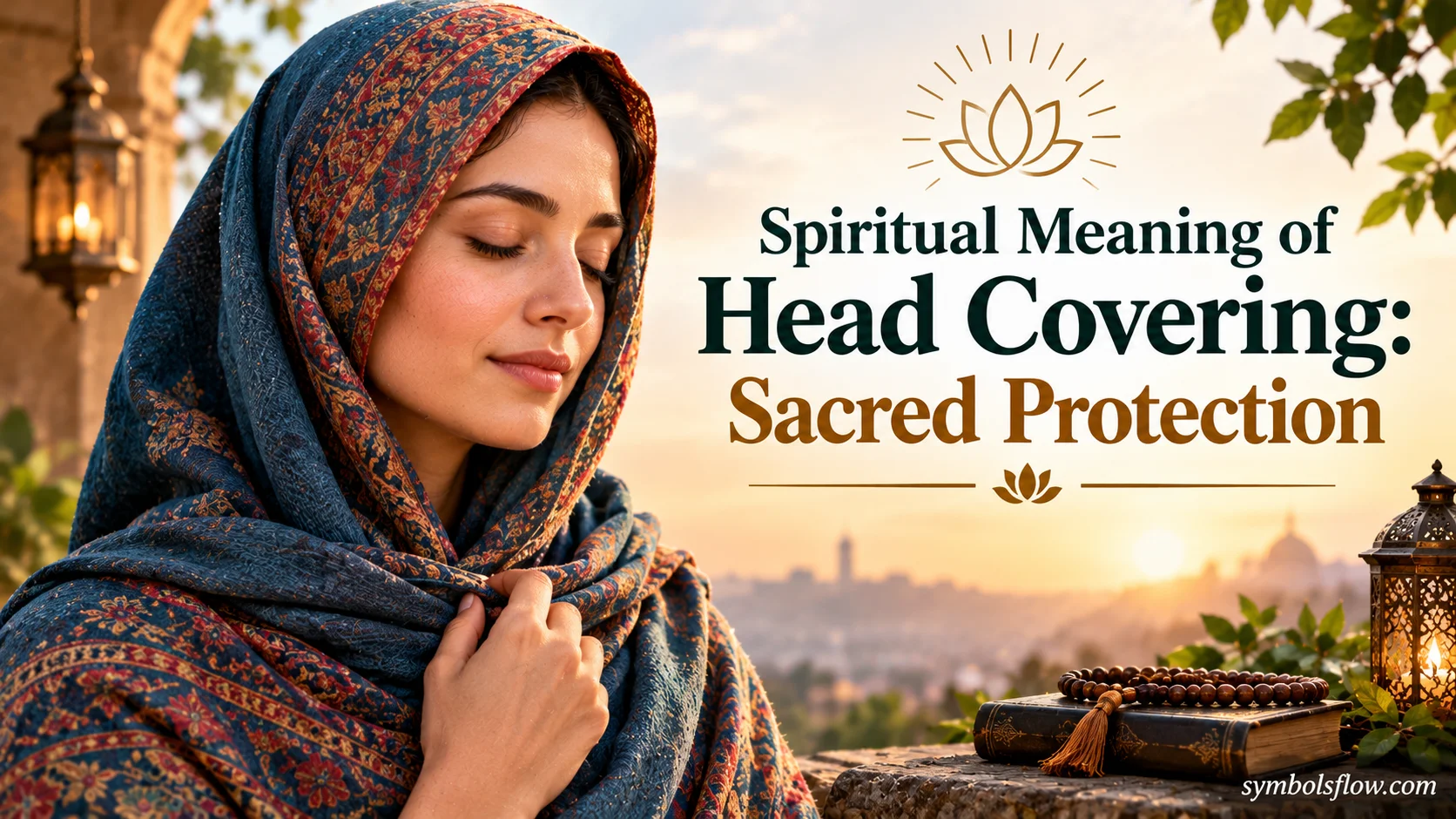
Head covering has held deep spiritual meaning in many cultures and traditions for centuries. People cover their heads to show respect, express faith, protect their spiritual energy, or feel closer to something greater than themselves. For many, it is more than a piece of cloth; it represents sacred protection, humility, and a connection with the divine.
The spiritual meaning of head covering can differ depending on personal beliefs, religious practices, and cultural backgrounds. Some people see it as a sign of devotion and modesty, while others view it as a way to create a sense of peace and inner strength. Covering the head during prayer, meditation, or sacred ceremonies may help a person feel focused, grounded, and spiritually connected.
In everyday life, head covering can also represent personal identity, dignity, and a desire for spiritual safety. It may remind someone to stay true to their values, protect their peace, and approach life with a calm heart. Although its meaning is not the same for everyone, head covering can serve as a meaningful symbol of faith.
“Let’s dive in!
Quick Answer
The Spiritual Meaning of Head Covering: Sacred Protection commonly represents reverence, modesty, spiritual identity, and protection of what a person considers sacred. In the USA, its meaning depends strongly on religious tradition, culture, personal choice, and social context.
A Symbol With Many Layers
A covering may create a symbolic boundary between the sacred and ordinary. It can also remind the wearer of values, devotion, humility, or belonging.
TL;DR
- Head coverings can symbolize reverence, modesty, protection, and identity.
- Ancient societies used veils and headdresses for religious and social purposes.
- American meanings vary widely across Jewish, Muslim, Christian, Native, and other communities.
- Some people experience covering as a spiritual reminder or personal boundary.
- Modern head coverings can express faith, culture, fashion, or individual identity.
- Meaning should always be understood through the wearer’s own tradition and intention.
What Does a Head Covering Symbolize?
A head covering is more than fabric placed over the hair or head. Across different traditions, the head has often been treated as a meaningful part of the body.
Reverence and Humility
Covering the head can represent awareness of something greater than oneself. In Jewish traditions, for example, the kippah can express reverence for God and awareness of divine presence.
Similarly, some Christian traditions have used veils or other coverings during worship. The physical act can encourage a person to enter a more focused and respectful state.
Protection and Sacred Boundaries
The idea of protection can be spiritual rather than physical. A covering may symbolize guarding thoughts, identity, modesty, or personal space.
For some people, it creates a visible boundary between private values and the outside world. That boundary can feel comforting, especially during prayer or other meaningful moments.
Identity and Belonging
Head coverings can also communicate community membership. A person’s covering may quietly tell others which tradition, family, or cultural group they identify with.
Therefore, the same piece of fabric can mean devotion to one person and cultural heritage to another.
Ancient Roots of Head Covering Symbolism
Head covering traditions are much older than modern religious institutions. Archaeological and historical evidence shows that veils and headdresses appeared throughout the ancient Mediterranean and Near East.
Early Near Eastern Traditions
One frequently cited early written example comes from Assyrian laws dating to the second millennium BCE. These laws connected veiling with particular social positions, while restricting its use by certain groups.
This shows that covering could communicate status as well as modesty. It wasn’t automatically a spiritual practice in every setting.
Greek and Roman Symbolism
Ancient Greek art frequently depicts women and divine figures with veils or cloth covering the head. Some examples connect the veil with goddesses, ritual settings, or formal presentation.
Roman religious practices also used covered heads in particular ceremonies. Over time, head coverings became connected with marriage, ritual, status, and public appearance.
The Meaning Was Never Fixed
Ancient evidence reminds us that head covering has never had one universal definition. It could suggest dignity, status, ritual purity, modesty, mourning, marriage, or sacred participation.
That history helps explain why modern interpretations remain diverse.
Head Covering in Judaism
Jewish head coverings provide one of the clearest examples of how a simple garment can develop deep spiritual meaning.
The Kippah and Reverence
The kippah, also called a yarmulke, is a small head covering worn by many Jewish people. Traditional sources connect covering the head with reverence and awareness of God’s presence.
The practice developed over centuries rather than appearing as one simple rule from the earliest biblical period. Its use also differs among Orthodox, Conservative, Reform, and other Jewish communities.
Women’s Hair Covering
In some Jewish communities, married women cover their hair as part of modesty practices. Depending on the community, coverings can include scarves, hats, or wigs.
This illustrates an important point: the same broad idea of “head covering” can have different meanings for men and women within the same religious tradition.
Head Covering in Christianity
Christian history includes several forms of head covering, although practices vary greatly today.
Biblical and Early Christian Connections
The New Testament’s First Letter to the Corinthians discusses women covering their heads during prayer and worship. Early Christian communities interpreted this passage in different ways across history.
Later Christian traditions developed veils, wimples, habits, and other forms of religious dress. For some women religious, the veil became associated with devotion and consecrated life.
Modern American Christianity
In the United States, many Christian denominations no longer require women to cover their heads. However, some conservative Christian groups continue the practice.
For those who follow it, a covering may represent obedience to scripture, humility, prayer, modesty, or separation from ordinary fashion.
Head Covering in Islam
Islamic head covering is one of the most recognizable forms of religious dress in modern America.
Hijab and Modesty
The Qur’an discusses modest dress and instructs believing women to draw their head coverings over their chests. Muslim interpretations of these teachings have developed differently across communities and historical periods.
For many Muslim women, hijab represents modesty and devotion to God. Others also describe it as an expression of identity, dignity, privacy, or belonging.
Different Forms and Meanings
A hijab isn’t one universal style. Muslim communities use many different colors, fabrics, shapes, and cultural styles.
Some women wear head coverings every day. Others wear them during specific religious settings, while some Muslim women don’t cover their hair at all.
What Does Head Covering Mean in America?
In the USA, head coverings exist within a highly diverse religious and cultural environment.
Common American Associations
| Context | Meaning in the USA | Common Associations | Notes |
| Jewish kippah | Reverence and Jewish identity | Prayer, synagogue, community | Practices vary by denomination |
| Muslim hijab | Modesty and faith | Identity, devotion, culture | Styles and personal practices differ |
| Christian veil | Worship or devotion | Prayer, modesty, tradition | More common in certain communities |
| Cultural headwrap | Heritage and identity | Family, beauty, tradition | Meaning varies by culture |
| Native ceremonial headdress | Cultural and spiritual authority | Leadership, ceremony, community | Specific traditions should not be generalized |
Visibility and Identity
In America, religious clothing can make identity more visible. A person wearing a kippah or hijab may be immediately recognized as belonging to a particular community.
That visibility can create pride and connection. However, it can also make religious identity more noticeable in public spaces.
Cross-Cultural Spiritual Meanings
Head coverings appear in many cultures, but their meanings should not be treated as interchangeable.
Sacred Presence
Across several traditions, covering can mark a special relationship with the sacred. It may be worn during prayer, ceremonies, religious study, or entry into a sacred place.
The underlying idea is often attentiveness. The covering reminds the wearer that an ordinary moment has become spiritually significant.
Modesty and Privacy
Another recurring theme is modesty. In some societies, covering hair or parts of the body communicates restraint and privacy.
However, modesty isn’t identical across cultures. What one community considers modest may be ordinary dress in another.
Cultural Heritage
Head coverings can preserve family and cultural memory. A particular wrap, hat, scarf, or ceremonial piece may connect someone with ancestors and community traditions.
This meaning can remain important even when the wearer lives far from the culture’s historical homeland.
Read More: Spiritual Meaning of Shaving Your Head: Renewal
Emotional and Psychological Meaning of Head Covering
People often give personal meaning to repeated clothing practices. A head covering can therefore become an emotional reminder.
Feeling Grounded
A familiar covering can create a sense of routine and stability. Putting it on may signal the beginning of prayer, worship, reflection, or a meaningful social occasion.
For some people, that repeated action becomes calming because it marks a familiar transition.
Feeling Protected
The idea of spiritual protection can also work as a personal symbol. The covering may represent a boundary around thoughts, values, identity, or private life.
This doesn’t necessarily mean the fabric is believed to provide supernatural protection. Often, its protective meaning is symbolic and emotional.
Expressing Inner Values
Clothing can make invisible values visible. A head covering may communicate humility, devotion, cultural pride, discipline, or commitment.
At the same time, observers shouldn’t assume a person’s complete beliefs from clothing alone.
Colors and Materials in Spiritual Head Coverings
The appearance of a covering can influence its symbolism, although there are no universal color rules.
White
White is frequently associated with purity, peace, simplicity, and sacred occasions. In some traditions, however, white may have more specific ritual meanings.
Black
Black can suggest seriousness, dignity, mourning, or formal religious identity. Its meaning depends heavily on community tradition.
Blue and Green
Blue may evoke peace, heaven, water, or protection in some symbolic systems. Green often suggests life, renewal, nature, or spiritual growth.
These associations are broad rather than universal.
Fabric and Texture
Silk, cotton, wool, linen, lace, and embroidered materials can also communicate different impressions. Handmade details may emphasize heritage, care, or family tradition.
However, material alone doesn’t determine spiritual meaning. Context and intention remain more important.
Head Coverings in Rituals and Sacred Spaces
A head covering can become especially meaningful when worn during a ritual.
Prayer and Worship
Some communities use head coverings during prayer or religious study. The practice can help distinguish sacred activity from everyday life.
This distinction is common across many religious traditions, although the specific rules differ.
Weddings and Life Ceremonies
Veils and other coverings have also appeared in wedding traditions. They can symbolize transition, modesty, family heritage, or ceremonial beauty.
In American weddings, however, the veil is often understood as a cultural tradition rather than a religious requirement.
Mourning and Remembrance
Historically, covered heads have sometimes appeared in mourning practices. A darker covering could communicate seriousness and grief.
Today, these meanings are less universal. Still, ceremonial clothing continues to help people express emotions that are difficult to put into words.
Head Covering in Fashion and Modern Culture
Modern Americans may encounter spiritual head coverings in workplaces, schools, social media, art, fashion, and entertainment.
Fashion and Self-Expression
Some people combine traditional coverings with contemporary clothing. This allows religious or cultural identity to remain visible without giving up personal style.
Social media has also created new spaces for people to explain the meanings behind their clothing.
Representation and Visibility
Head coverings can become powerful symbols of representation. Seeing diverse religious clothing in American public life can challenge the assumption that one style represents everyone.
However, representation should not turn sacred clothing into a costume. Traditional garments often carry histories that deserve context.
Misunderstandings and Controversies
Head coverings can sometimes be misunderstood because outsiders may see only the visible garment.
Avoiding One-Meaning Assumptions
A headscarf doesn’t automatically tell you everything about someone’s beliefs. Two people wearing similar coverings may have completely different reasons for doing so.
Likewise, not every person within a religious tradition follows the same practice.
Sacred Clothing and Cultural Appropriation
Some ceremonial headdresses carry specific community rights and responsibilities. This is especially important when discussing Indigenous traditions.
For example, certain Native American eagle-feather headdresses are connected with leadership, accomplishment, and cultural or religious authority. They aren’t simply decorative versions of a generic “Native” costume.
Protection Versus Stereotypes
The phrase “spiritual protection” can also become misleading when it suggests that every covering has magical power.
A more careful interpretation treats protection as symbolic unless a particular religious tradition explicitly teaches something more specific.
How the Meaning of Head Covering Has Changed
The meaning of head covering has shifted as societies changed.
From Status to Faith
In ancient societies, veiling could communicate social position, gender, marital status, or respectability. Religious meanings later developed alongside these social meanings.
As religions spread, existing clothing customs were sometimes adapted into new traditions.
From Obligation to Personal Choice
Modern American society gives individuals more clothing choices than many historical societies did. As a result, religious covering can become a deliberate public expression of identity.
For some people, choosing to cover is deeply traditional. For others, choosing whether to cover is itself part of personal religious reflection.
Tradition Meets Modern Life
Today, head coverings can exist comfortably alongside modern fashion, professional life, education, and social media. Their meanings continue to evolve without losing their historical roots.
What Does a Head Covering Mean Spiritually Today?
A head covering can symbolize several ideas at once. Its meaning usually becomes clearer when you consider the wearer’s faith, culture, setting, and personal intention.
A Symbol of Sacred Protection
Protection is one of the strongest modern spiritual interpretations. The covering can represent guarding one’s inner life and keeping sacred values close.
A Symbol of Reverence
It can also express humility before God or respect for a sacred moment. The physical covering becomes a reminder to pay attention.
A Symbol of Identity
Finally, it may announce belonging without requiring words. In a multicultural country like the United States, that visible identity can connect a person with family, faith, and community.
FAQs
Is a Head Covering a Symbol of Protection?
It can be. Many people interpret covering as a symbolic boundary that protects modesty, identity, privacy, or sacred intention.
What Does a Head Covering Mean in the Bible?
Biblical references to head covering appear in several contexts. One well-known New Testament passage discusses women covering their heads during prayer and worship.
What Does a Head Covering Symbolize in Islam?
For many Muslim women, a head covering such as hijab represents modesty and devotion to God. It can also express identity, dignity, privacy, and community belonging.
What Does a Head Covering Mean in Judaism?
Jewish head covering can symbolize reverence, humility, and awareness of God’s presence. The kippah is particularly associated with these ideas.
Does Wearing a Head Covering Have Spiritual Power?
That depends on the religious tradition and individual belief. Some people understand the covering mainly as a reminder or symbol, while others attach deeper religious significance to it.
Conclusion
The Spiritual Meaning of Head Covering: Sacred Protection brings together several enduring ideas: reverence, modesty, identity, privacy, belonging, and symbolic protection. Yet no single meaning applies to every covering or every person.
From ancient veils and ceremonial headdresses to modern kippot, hijabs, scarves, and religious habits, head coverings continue to connect outward appearance with inner values.

1 thought on “Spiritual Meaning of Head Covering: Sacred Protection”