
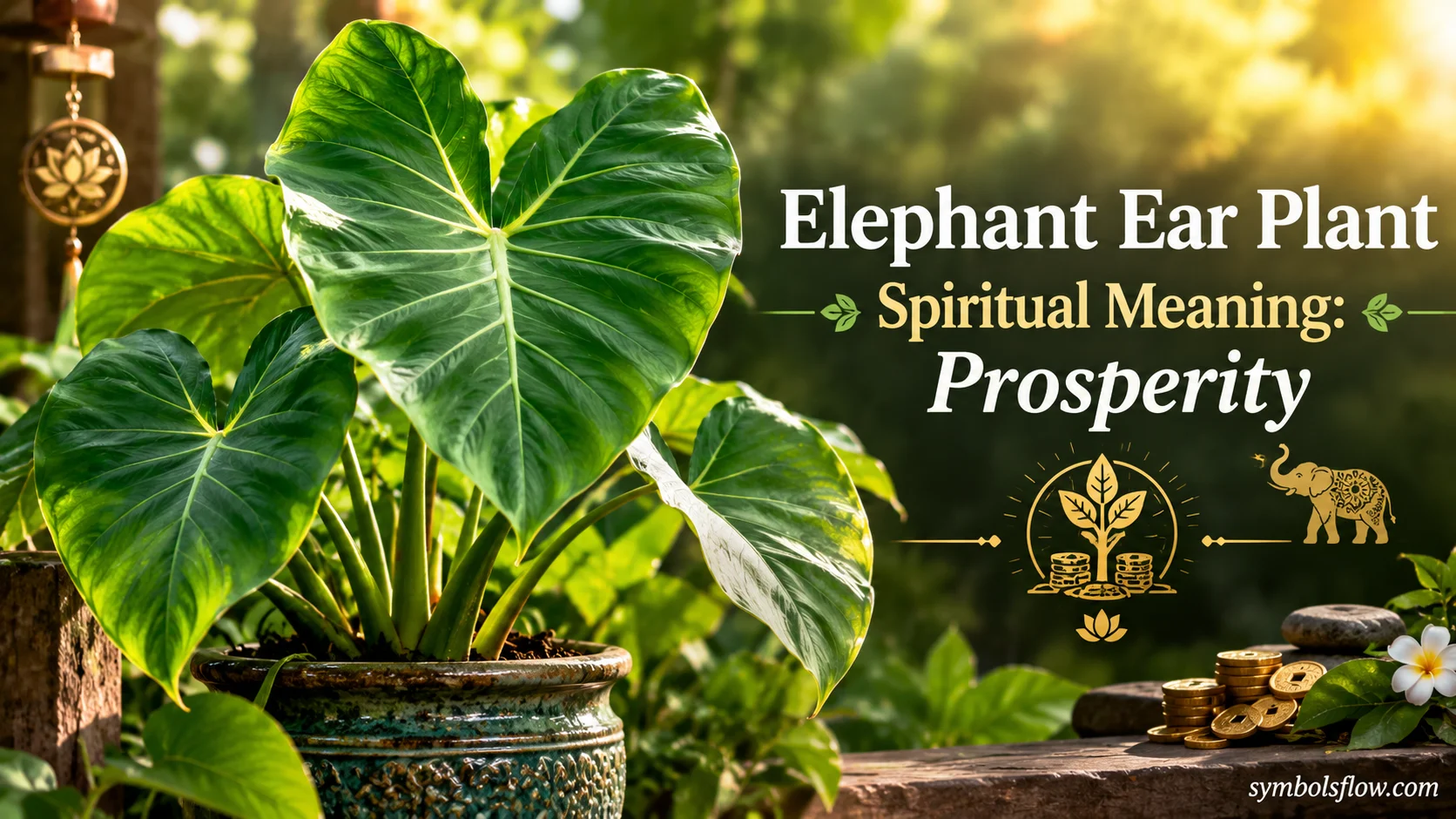
The Elephant Ear Plant Spiritual Meaning: Prosperity connects abundance, growth, good fortune, protection, and strength with its impressive size and large leaves.
Its lush foliage, greenery, and natural beauty bring positive energy to a garden or home. The tropical plants have oversized leaves that suggest flourishing, vitality, grounding, and resilience. Their prominent leaves symbolize the ability to shelter others, reflecting nurturing, security, and stability. Like the spiritual meaning of a cactus, the elephant ear represents endurance, natural protection, and the strength to grow through changing circumstances.
The spiritual meaning of Elephant Ear Plant relates to personal growth, inner strength, wealth, and success. Its symbolic meanings in different spiritual contexts encourage people to consider their personal intentions, spiritual values, and growth mindset. Spiritual symbolism, plant symbolism, and nature symbolism connect the plant’s visible characteristics with reminders of meaningful goals. Its expansion and connection with nature represent abundance symbolism, growth energy, grounded energy, emotional stability, and well-being. Caring for indoor plants or outdoor plants through gardening offers a personal way to practice patience and observe gradual progress. These symbolic interpretations are not a scientific property of the plant. Their positive symbolism and spiritual significance depend on individual spiritual beliefs, spiritual tradition, and personal experience.
“Let’s dive in!
Quick Answer
Elephant Ear Plant Spiritual Meaning: Prosperity usually centers on abundance, growth, protection, resilience, and grounded success. In the USA, people often read its broad green leaves and vigorous growth as symbols of a flourishing home or personal life. Broader spiritual interpretations also connect it with nourishment, renewal, and connection to nature.
TL;DR
- Elephant ear plants commonly symbolize prosperity, abundance, and steady growth.
- Their huge leaves can suggest protection, shelter, and emotional security.
- Taro has ancient agricultural roots across Asia and the Pacific.
- In the USA, elephant ears often represent tropical beauty and thriving spaces.
- Modern spiritual interpretations connect them with grounding and personal renewal.
- Their symbolism depends on personal beliefs, culture, and the plant’s context.
What Does an Elephant Ear Plant Symbolize?
Elephant ear plants have an unusually strong visual presence. Their enormous leaves can look like natural shields, umbrellas, or open hands. Because of this, modern symbolic readings often focus on protection, receptivity, and abundance.
The plant’s rapid growth adds another layer. When healthy, elephant ears can produce impressive foliage and create a feeling of plenty. As a result, many people connect them with progress, prosperity, and the idea of having enough.
Main Symbolic Meanings
• Prosperity through steady growth and healthy expansion
• Protection through broad, shelter-like leaves
• Resilience through adaptation and renewal
• Grounding through strong roots and natural growth
• Nourishment through the plant’s agricultural history
• Renewal through fresh leaves and seasonal cycles
These meanings are symbolic rather than scientific claims. A plant doesn’t guarantee wealth or change a person’s future. Instead, its appearance can serve as a personal reminder of values such as patience, growth, and gratitude.
Why Is the Elephant Ear Plant Linked to Prosperity?
The connection between elephant ears and prosperity mainly comes from their visual abundance. One mature plant can create a striking mass of foliage, making it easy to associate the plant with fullness and flourishing.
Green is also widely associated with life, renewal, and growth. When combined with enormous leaves, that color can strengthen the impression of abundance.
Growth as a Symbol of Prosperity
Prosperity doesn’t always have to mean money. For many people, it can mean having supportive relationships, meaningful work, creativity, peace, or a healthy connection with nature.
Therefore, an elephant ear can represent a broader kind of prosperity. Its message becomes less about suddenly receiving wealth and more about creating conditions where something valuable can grow.
A Reminder to Nurture What Matters
Plants also provide a useful metaphor for personal development. Growth requires attention, suitable conditions, patience, and time.
Similarly, personal goals usually need consistent care. The elephant ear’s symbolism can therefore encourage people to focus on what they’re cultivating rather than expecting instant results.
What Does the Elephant Ear Leaf Represent?
The elephant ear leaf is the plant’s strongest visual symbol. Depending on the species, leaves can be heart-shaped, arrow-shaped, shield-like, glossy, textured, green, burgundy, or nearly black.
Their large surface area creates several symbolic associations. A leaf that appears to shelter another plant can suggest protection, while an open leaf can suggest receptivity and generosity.
The Heart-Shaped Form
Some elephant ears have leaves that appear distinctly heart-shaped. This can naturally inspire associations with love, compassion, emotional openness, and nurturing.
However, not every elephant ear has the same leaf shape. The exact appearance varies across genera, species, and cultivars.
The Shield-Like Appearance
Some varieties have upright leaves that resemble shields. Symbolically, this can suggest boundaries and protection.
For a modern reader, the image can represent protecting your peace without completely closing yourself off from the world.
Historical Roots of Elephant Ear Plants
Elephant ears aren’t one single plant. The common name covers several related groups, including Alocasia, Colocasia, and Xanthosoma.
Many Alocasia species come from tropical parts of Asia and the Pacific. Colocasia esculenta, commonly known as taro, has an especially long history as a cultivated food crop.
Ancient Agricultural Connections
Taro is an ancient crop with complex origins. Genetic research points toward Southeast Asian origins for major cultivated lineages, while archaeological evidence shows very early use and cultivation in parts of the Pacific and New Guinea.
Evidence indicates that people were using taro thousands of years ago. Researchers have also found evidence connected with early processing of taro in the Solomon Islands and cultivation in ancient Pacific communities.
This history matters because it changes how we view the plant. It wasn’t simply a decorative tropical leaf. Related plants supported communities through food, farming knowledge, and generations of cultivation.
From Food Crop to Decorative Plant
Over time, elephant ear relatives traveled widely through human movement and agriculture. Today, many American gardeners know them mainly for their dramatic foliage.
That shift created a new symbolic layer. Instead of focusing primarily on nourishment, modern gardeners often see elephant ears as signs of tropical beauty, vitality, growth, and abundance.
Elephant Ear Plant Symbolism in the USA
In the United States, elephant ears are especially noticeable in warm-climate gardens. They can also appear in containers, patios, conservatories, and seasonal displays.
Their meaning in American culture is therefore strongly connected to gardening and home spaces. The plant often communicates lushness, relaxation, and a desire to bring tropical character into everyday surroundings.
Home and Garden Associations
A large elephant ear can become a focal point in a garden. Its size naturally draws attention and can make an ordinary outdoor area feel more dramatic.
For some homeowners, that makes the plant a symbol of creating a welcoming and abundant home. The spiritual interpretation usually comes from personal meaning rather than a single American tradition.
Prosperity and New Beginnings
Because healthy elephant ears produce noticeable growth, people sometimes use them symbolically when starting something new.
A new home, garden project, creative goal, or personal chapter can all provide a reason to associate the plant with growth. The plant becomes a visual reminder that new beginnings need patience and care.
Elephant Ear Plant Spiritual Meaning Across Cultures
The broader spiritual history of elephant ears needs some care. There isn’t one worldwide belief system that assigns the plant a single spiritual meaning.
Instead, different plants in this group have different cultural histories. Taro, in particular, has deep importance across Pacific societies.
Taro in Pacific Traditions
In Hawai‘i, taro is known as kalo and has a particularly important cultural history. Research describes strong connections between taro, Hawaiian culture, food traditions, and religious ceremonies.
Across parts of the Pacific, taro has also been connected with community gatherings, ceremonies, and traditional food systems.
These traditions shouldn’t be reduced to a simple claim that “elephant ears bring money.” Their meanings are much richer and often involve ancestry, food, land, community, and continuity.
Asian Connections
Taro and related aroids have long histories in tropical Asia. Their cultivation required knowledge of water, soil, seasons, propagation, and food preparation.
This agricultural background can support modern symbolic ideas about nourishment and abundance. Still, specific spiritual beliefs vary by place and community.
Elephant Ear Plant Meaning in Feng Shui
Modern plant guides sometimes connect elephant ears with Feng Shui ideas about growth, positive energy, and prosperity. These interpretations are popular among houseplant enthusiasts.
However, Feng Shui is a traditional system with its own history and principles. It shouldn’t be treated as proof that a particular plant can create financial results.
Growth and Positive Energy
The plant’s upright growth and expansive foliage can fit modern interpretations of vitality and movement.
For someone who uses Feng Shui as a personal practice, an elephant ear may serve as a visual reminder of growth and balance. The meaning depends on the person’s chosen tradition and interpretation.
A Symbolic Approach
A useful approach is to treat the plant as an intentional object rather than a guaranteed source of luck.
You might place it somewhere that reminds you to nurture your goals. In that sense, the plant supports reflection without requiring a literal belief in supernatural effects.
Emotional and Psychological Meaning of Elephant Ears
Plants can influence how people experience a space, even when their symbolic meanings are personal. Large green foliage often creates a strong sense of natural presence.
An elephant ear can therefore represent calm, safety, vitality, or emotional renewal.
Protection and Emotional Safety
The plant’s enormous leaves can resemble natural shelter. That visual quality may encourage people to associate it with feeling protected.
Symbolically, this can represent creating a safe environment. It might also remind someone to establish healthy boundaries around their time and energy.
Resilience and Adaptability
Elephant ears can look delicate despite their impressive size. Their growth patterns also depend heavily on suitable warmth, moisture, and growing conditions.
That creates a useful metaphor for resilience. Strength doesn’t always mean surviving without support. Sometimes it means knowing what conditions help you thrive.
Elephant Ear Plant Colors and Their Symbolism
Elephant ears come in more visual forms than many people realize. Green is the most familiar, but cultivars can have dark, purple, burgundy, silver, or variegated foliage.
Color symbolism can add a personal layer to the plant’s meaning. Still, these interpretations are modern and shouldn’t be confused with universal cultural rules.
| Plant Appearance | Common Symbolic Association | Modern Context | Meaning to Consider |
| Bright green leaves | Growth and prosperity | Gardens and homes | Fresh energy and renewal |
| Dark foliage | Mystery and depth | Interior displays | Reflection and transformation |
| Burgundy leaves | Strength and confidence | Decorative gardens | Courage and individuality |
| Silver or patterned leaves | Uniqueness and awareness | Houseplant collections | Seeing situations differently |
| Large mature foliage | Abundance and protection | Outdoor focal points | Flourishing and shelter |
Green Elephant Ear Meaning
Green is the clearest prosperity symbol in modern interpretations. It suggests life, renewal, natural growth, and a healthy environment.
For that reason, a green elephant ear can represent the idea of growing steadily while remaining grounded.
Dark Elephant Ear Meaning
Dark leaves can create a more mysterious feeling. Symbolically, they may suggest inner reflection, transformation, or comfort with uncertainty.
This interpretation is especially common in modern plant symbolism rather than ancient religious tradition.
Elephant Ear Plant in Modern Home Decor
Today, elephant ears are often used to create a dramatic tropical atmosphere. Their oversized foliage can transform a plain corner into a strong visual feature.
That decorative role can also influence their symbolism. A plant chosen for its size may represent confidence, openness, and a willingness to make space for beauty.
In Homes
An elephant ear can become a living reminder of growth. Seeing new leaves appear can make change feel visible and tangible.
Some people may also associate a thriving houseplant with care and consistency. The symbolism becomes especially meaningful when the plant is connected with a personal milestone.
In Gardens and Patios
Outdoor elephant ears can represent expansion and connection with nature. Their broad leaves can make a garden feel more abundant.
In the USA, they are especially suited to warm regions, although growing conditions vary considerably by species and location.
What Does an Elephant Ear Plant Mean as a Gift?
An elephant ear can make a meaningful gift when the recipient enjoys plants or nature. Its symbolic message can focus on growth rather than guaranteed luck.
It can work especially well for a new home, garden project, creative beginning, or personal milestone.
Gift Meanings
• Growth toward a new chapter
• Prosperity through patience and care
• Protection and a welcoming home
• Resilience during periods of change
• Abundance in relationships and experiences
• Connection with nature and renewal
The most meaningful interpretation is usually the one connected to the recipient’s life. A short personal message can make the symbolism more memorable.
Read More: Shiva Eye Shell Spiritual Meaning: Third Eye Protection
Elephant Ear Plant Tattoos and Personal Symbolism
Plant tattoos often carry meanings chosen by the person wearing them. An elephant ear tattoo can represent growth, prosperity, resilience, family, nature, or a meaningful connection to a particular place.
Because the plant has strong visual lines and oversized leaves, it can also work well as a bold botanical design.
Personal Meaning Matters Most
A tattoo doesn’t have one fixed definition. Someone may choose an elephant ear because it reminds them of childhood gardens, a family tradition, a tropical homeland, or a period of personal growth.
Therefore, the meaning should be understood through the wearer’s story. The same plant can represent different experiences for different people.
Misunderstandings and Misuse of Elephant Ear Symbolism
One common misunderstanding is treating spiritual plant meanings as established facts. There is no scientific evidence that an elephant ear plant itself attracts money or changes a person’s destiny.
Another problem occurs when complex cultural traditions are reduced to simple internet claims. Taro’s history in Hawai‘i and the Pacific, for example, involves food, land, genealogy, ceremony, and community.
Keeping Symbolism Respectful
A respectful interpretation separates documented cultural history from personal spirituality.
It’s reasonable to say that someone sees an elephant ear as a symbol of prosperity. It is different from claiming that every culture has always believed the plant guarantees wealth.
Avoiding Cultural Simplification
Plants can cross borders through trade, migration, agriculture, and gardening. Their meanings can change along the way.
That doesn’t make modern interpretations meaningless. It simply helps us recognize the difference between historical tradition and newer symbolic language.
How Elephant Ear Plant Meaning Has Changed Over Time
The story of elephant ears shows how symbolism evolves. Related plants moved from important food crops and culturally significant plants into modern ornamental gardening.
Today, their enormous leaves often communicate tropical beauty and abundance. Online spiritual communities have added meanings such as protection, prosperity, grounding, intuition, and personal growth.
From Nourishment to Abundance
The connection between food and abundance is easy to understand. A plant that historically helped provide nourishment can naturally inspire ideas about having enough.
However, modern prosperity symbolism often shifts toward financial success and personal achievement. That is a newer interpretation rather than the whole historical story.
From Cultural Plant to Lifestyle Symbol
Houseplants are now part of modern lifestyle culture. Social media has made unusual foliage, plant collections, and indoor gardens highly visible.
As a result, elephant ears can symbolize both nature and personal identity. For some people, caring for the plant represents patience, creativity, or creating a peaceful home.
How to Use Elephant Ear Symbolism in Everyday Life
You don’t need a formal spiritual practice to find meaning in a plant. Symbolism can simply provide a useful way to reflect on personal values.
An elephant ear can represent the question, “What am I trying to grow?”
Simple Reflection Ideas
• Notice new leaves as reminders that progress can be gradual.
• Use the plant as a visual symbol for abundance.
• Reflect on which parts of life need stronger protection.
• Let its growth inspire patience with long-term goals.
• Connect its care with gratitude for nature.
The goal isn’t to make the plant perform a supernatural function. Instead, its presence can give an ordinary space a meaningful visual reminder.
FAQs
What is the spiritual meaning of an elephant ear plant?
The elephant ear plant is commonly interpreted as a symbol of prosperity, abundance, protection, growth, and resilience. These meanings come mainly from its large leaves, vigorous appearance, and associations with nourishment and nature.
Does an elephant ear plant symbolize money?
Modern spiritual interpretations sometimes connect elephant ears with financial prosperity. However, the plant doesn’t have a proven ability to attract money. Its prosperity symbolism is better understood as a reminder of growth, abundance, and opportunity.
Is elephant ear a lucky plant?
Some modern plant and spiritual traditions describe elephant ears as lucky or protective. However, there isn’t one universal cultural belief that makes every elephant ear a luck-bringing plant.
What does an elephant ear leaf symbolize?
Its broad leaf can symbolize shelter, protection, receptivity, abundance, and nurturing. Heart-shaped varieties can also inspire associations with love and emotional openness.
What does an elephant ear plant mean in Feng Shui?
Modern Feng Shui-inspired plant interpretations often associate elephant ears with growth, vitality, and positive energy. Specific placement practices vary, so they should be treated as part of a chosen tradition rather than guaranteed financial advice.
Is elephant ear plant symbolism ancient?
The plant group itself has very old agricultural and cultural histories, especially through taro. However, the specific modern claim that “elephant ear means prosperity” shouldn’t automatically be presented as an ancient universal belief.
Conclusion
The Elephant Ear Plant Spiritual Meaning: Prosperity is rooted mainly in the plant’s powerful visual qualities. Its enormous leaves suggest abundance, shelter, growth, and protection, while its long agricultural history adds ideas of nourishment and continuity.
In the USA, elephant ears are often admired as dramatic garden and houseplants. Their modern spiritual symbolism can therefore become a personal language for prosperity, resilience, grounding, and new beginnings.

1 thought on “Elephant Ear Plant Spiritual Meaning: Prosperity”