
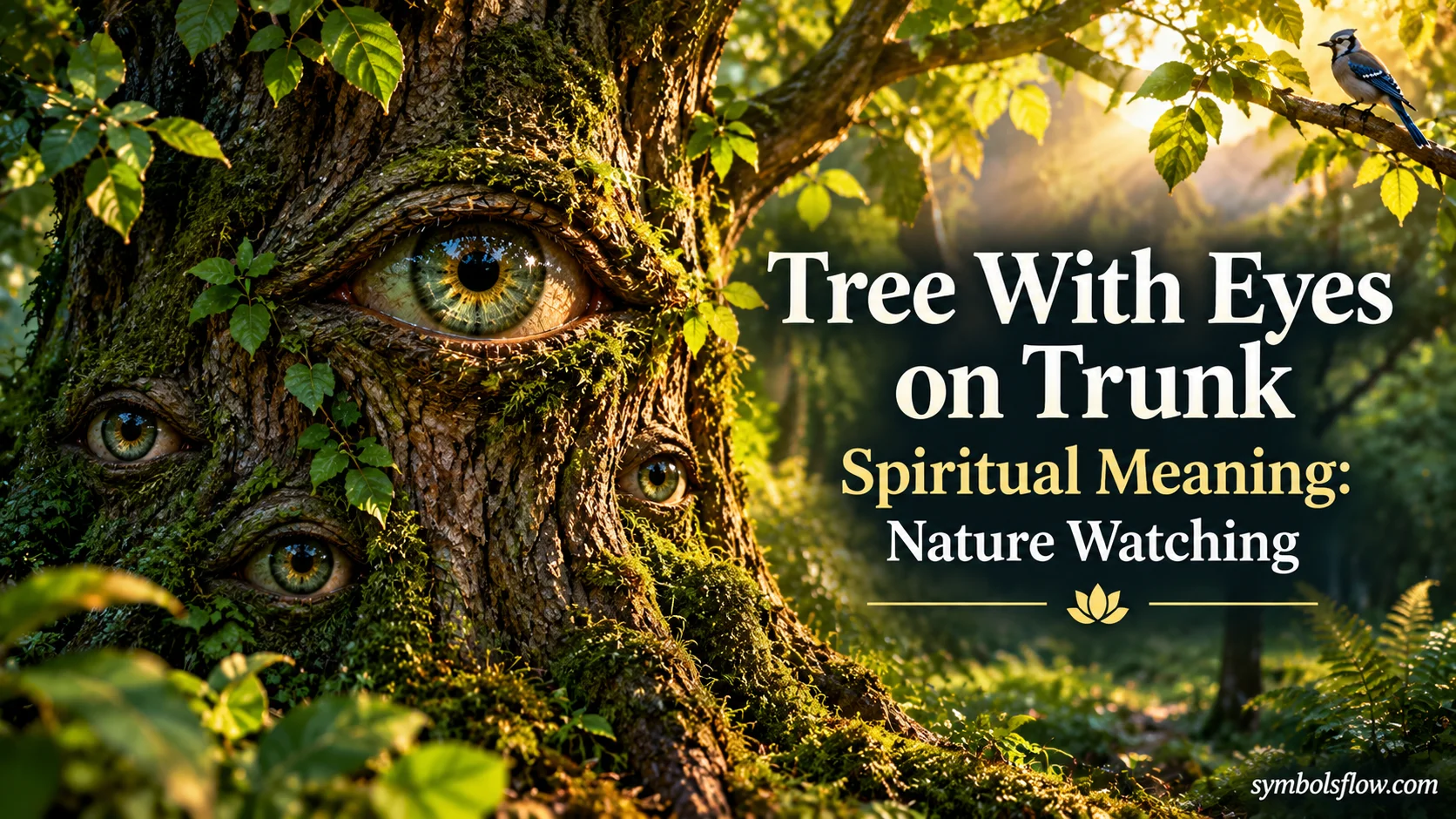
The Tree With Eyes on Trunk Spiritual Meaning: Nature Watching explores how tree markings can symbolize awareness, wisdom, and a spiritual connection between people and nature.
Trees connect human existence with the natural world, forming a living bridge between earth and sky, the physical and the divine. They provide essentials for survival, including oxygen, shelter, and food, while serving as powerful symbols in cultural traditions and spiritual traditions. Many Indigenous communities regard trees as a sacred place of connection and respect them as sentient beings and spiritual entities. Their deep relationship and reciprocal relationship with nature reflect Indigenous wisdom. The World Bank has reported that Indigenous people protect 80 percent of the remaining biodiversity on the planet, despite representing only four percent of the global population. Their successful history of protecting biodiversity highlights the importance of addressing exploitation, marginalisation, and improving environmental policies and environmental practices.
An ordinary tree may appear to look back through its knots, bark patterns, and hollow shapes. These features can resemble human eyes, creating a feeling that nature is quietly watching. This unusual sight may bring curiosity, comfort, or uneasiness, especially when the tree is discovered during a quiet walk. In the United States, trees often represent strength, family roots, and the passage of time. Their eye-like markings may encourage awareness, attention, and a reminder to notice the world around them. Historic beliefs, cultural beliefs, and cultural narratives connect tree symbolism with ancestral wisdom, cycles of growth, and renewal. The oak represents sovereignty and courage, the willow suggests emotional healing and intuition, and the cedar symbolizes sacred protection and purification. Sacred forests represent living places of communion between the human spirit and nature. These traditions highlight the spiritual significance and ecological roles of trees, along with the deep connections people share with individual trees. Such connections can shape worldviews, lifestyles, spiritual growth, and personal meaning.
Tree symbolism offers different ways to understand this sight, but no universal spiritual explanation exists for a tree that seems to have eyes. Natural patterns can resemble faces because the human brain is skilled at recognizing familiar shapes. Tree markings invite observation and mindfulness, but they do not establish a supernatural presence or provide reliable predictions. Spiritual symbolism, spiritual awareness, and nature connection may still help people find personal meaning in the experience. Some associate the apparent eyes with wisdom, protection, healing, and spiritual connection, while others use the moment for personal reflection. The belief that trees symbolize awareness does not mean trees literally watch people. It can encourage respect for nature, sacred trees, and the natural world connection that sustains life. Recognizing the cultural importance of trees allows people to explore their meanings with curiosity and respect.
“Let’s dive in!
Quick Answer
The Tree with Eyes on Trunk Spiritual Meaning often centers on awareness, protection, wisdom, and feeling connected to nature. In the United States, it may represent a reminder to observe your surroundings, trust thoughtful reflection, and respect the natural world.
TL;DR
- Eye-like tree markings can symbolize awareness and attention.
- Strong trunks represent stability, wisdom, and deep personal roots.
- Some spiritual interpretations connect watching eyes with protection.
- Natural bark patterns can trigger the brain’s face-recognition instincts.
- Modern art uses tree eyes to express mystery and environmental connection.
- Personal meaning depends on context, culture, and individual beliefs.
What Does a Tree With Eyes on Its Trunk Look Like?
A tree with eyes usually has knots, hollows, scars, or bark patterns that resemble a face. These features may look like two eyes, a single staring eye, or a complete expression.
In American forests, such patterns can appear on old oak trees, maples, pines, and other species. Their appearance depends on the tree’s age, growth, damage, and surrounding conditions.
Natural Patterns That Resemble Eyes
Eye-like markings can form when branches break, bark grows unevenly, or wounds heal over time. Dark hollows may resemble pupils, while raised bark can create the appearance of eyelids.
The pattern may seem especially striking when sunlight and shadows emphasize its shape. However, the tree doesn’t need unusual features to inspire a meaningful personal interpretation.
Why the Image Feels Powerful
Human beings naturally recognize faces in familiar surroundings. Consequently, a tree that appears to have eyes can feel strangely alive, even when its markings have ordinary natural causes.
This contrast between natural growth and human imagination gives the image much of its symbolic appeal.
The Spiritual Meaning of Eyes on a Tree
The eyes may change how people interpret the tree, adding ideas of awareness, guardianship, and hidden wisdom. These meanings are personal interpretations rather than universal spiritual rules.
For many people, the image creates a feeling that nature deserves attention instead of being treated as background scenery.
Awareness and Observation
Eyes commonly represent the ability to notice what others miss. When they appear on a tree, they can remind you to observe your surroundings and reflect before making decisions.
This meaning may feel relevant during periods of change, uncertainty, or personal growth.
Protection and Wisdom
Some spiritual interpretations view eye-like markings as symbols of a guardian watching over a place. The tree’s height, strength, and long life can reinforce that association.
Others connect the image with wisdom because trees endure changing seasons while remaining rooted. Together, these qualities can suggest patience, awareness, and resilience.
Ancient Roots of Tree Symbolism
Trees have carried spiritual and cultural meanings for thousands of years. Long before modern nature photography, people used trees to represent life, continuity, ancestry, and the relationship between earth and sky.
However, ancient traditions did not all assign the same meaning to every tree. The specific idea of eyes appearing on a trunk should not automatically be treated as an ancient belief shared across cultures.
Sacred Trees in Ancient Traditions
In several ancient societies, trees appeared in stories about creation, divine presence, renewal, and the afterlife. Their roots reached into the earth, while their branches stretched toward the sky.
Some traditions imagined a world tree connecting different levels of existence. This broader symbolism can help explain why a tree that seems watchful may feel spiritually significant today.
Pre-Christian European Beliefs
Certain pre-Christian European traditions treated particular trees and groves as sacred places. Trees also appeared in myths about transformation, protection, fertility, and knowledge.
Norse mythology, for example, includes Yggdrasil, the great ash tree associated with the structure of the cosmos. Its significance concerns a larger sacred tree, not specifically eyes on bark.
These older traditions provide historical context for tree symbolism without proving that eye-shaped trunks carry one inherited meaning.
What Does a Tree With Eyes Mean in America?
In the United States, trees often represent endurance, family history, freedom, and connection to the land. An eye-like pattern can add a sense of mystery to these familiar associations.
American interpretations also vary by region, personal background, religious beliefs, and experiences outdoors. A hiker, artist, gardener, and spiritual seeker may all see something different in the same tree.
Trees as Symbols of Memory and Belonging
Many Americans associate old trees with childhood homes, family gatherings, neighborhood traditions, or favorite outdoor places. A tree that appears to watch over its surroundings may therefore suggest continuity and belonging.
In addition, trees are important in public parks, memorial landscapes, and community spaces. Their presence can connect personal memories with a place’s wider history.
Nature and American Identity
American culture includes both wilderness imagery and efforts to protect forests and public lands. Trees can symbolize independence and adventure, but they also represent ecological responsibility.
For some observers, a tree with eyes becomes a reminder that the natural world deserves care. Rather than suggesting literal surveillance, its imagined gaze can encourage people to become more attentive to their environment.
Cross-Cultural and Spiritual Interpretations
Tree symbolism appears in many parts of the world, although its meanings differ across traditions. Some communities understand particular trees through religious teachings, ancestral relationships, local histories, or longstanding cultural practices.
Therefore, it’s important not to combine separate beliefs into one universal explanation for a tree with eyes.
Trees as Connections Between Worlds
In some traditions, trees represent a connection between earthly life and spiritual realms. Their roots and branches provide a natural image for relationships between ancestors, living people, and the wider cosmos.
Other traditions associate specific trees with sacred figures, protection, healing, or renewal. These associations belong to their particular cultural settings and shouldn’t be generalized to every tree.
The Eye as a Spiritual Symbol
Eyes can represent perception, knowledge, vigilance, or divine awareness in different religious and cultural contexts. However, their meaning depends on the symbol’s form and the tradition using it.
Seeing eye-like shapes in a tree doesn’t automatically connect the tree to a particular religion. Instead, you can explore the image through your own beliefs while respecting the distinct meanings other communities hold.
Emotional and Psychological Meaning
A tree with eyes can create several emotions at once. You might feel peaceful, curious, protected, surprised, or slightly unsettled when you notice its face-like markings.
These reactions don’t necessarily indicate a supernatural message. They can reflect how people recognize patterns, interpret unfamiliar shapes, and connect images with personal experiences.
Why We See Faces in Trees
The tendency to recognize meaningful shapes in random patterns is called pareidolia. It explains why people sometimes see faces in clouds, rocks, wood grain, and tree bark.
This ordinary feature of human perception can make an otherwise familiar landscape feel extraordinary. It also explains why two people may disagree about whether a tree looks friendly, frightening, or completely ordinary.
What Your Reaction Might Reflect
Your response can offer a useful starting point for personal reflection. For example, a comforting expression may bring up memories of safety, while a strange-looking face may remind you of uncertainty.
Consider these possible associations:
- Comfort: Feeling supported during a difficult period.
- Curiosity: Wanting to understand something unfamiliar.
- Caution: Becoming more aware of your surroundings.
- Resilience: Remembering your ability to adapt and recover.
- Connection: Feeling closer to nature and the changing seasons.
These are reflective possibilities, not fixed psychological diagnoses or guaranteed spiritual messages.
Symbolism of Different Eye-Like Tree Patterns
Not every tree with eye-like markings creates the same impression. Shape, size, color, and location can influence how an observer interprets the image.
The following table offers possible personal interpretations rather than established rules.
| Tree feature | Possible symbolic meaning | Common emotional association |
| Two eye-like knots | Awareness and observation | Curiosity |
| One large dark hollow | Mystery and introspection | Wonder |
| Rounded marks on an old trunk | Experience and endurance | Respect |
| Eye-like shapes surrounded by green growth | Renewal and resilience | Hope |
| A face-like pattern in shadow | The unknown or hidden concerns | Uneasiness |
Does the Tree’s Condition Matter?
An old tree may suggest longevity because it has survived many seasons. Meanwhile, new growth around a scar can remind an observer of recovery and renewal.
Still, the tree’s physical condition matters more than any imagined symbolism when considering its care. A deep hollow, damaged trunk, or large crack may have practical implications for the tree’s health and stability.
Does the Number of Eyes Matter?
Some people may attach personal meaning to one eye, two eyes, or several eye-like marks. For instance, one eye might suggest focused attention, while two may evoke balance or observation.
These associations are creative interpretations, not a consistent spiritual system. You don’t need to count the markings or find a special number to appreciate the experience.
What Different Tree Species May Symbolize
The type of tree can add another layer of meaning, especially when a particular species already has cultural or personal significance. However, an eye-like pattern doesn’t change a species’ established symbolism in any universally recognized way.
Oak, Maple, Pine, and Willow
In American settings, different trees often carry familiar associations:
- Oak: Strength, endurance, and stability.
- Maple: Seasonal change, warmth, and regional identity.
- Pine: Persistence, evergreen life, and renewal.
- Willow: Flexibility, reflection, and mourning in some contexts.
These meanings vary with tradition and personal experience. A maple tree near a childhood home, for example, may have a more specific meaning to you than any general symbolism suggests.
Why Location Adds Meaning
A tree beside a family home may feel protective, while one standing alone in a forest may inspire mystery. Similarly, an eye-like marking near a walking trail might become a memorable feature of a favorite outdoor place.
The surroundings help shape the experience. Consider the setting alongside the tree’s appearance instead of assigning meaning based on species alone.
Read More: Veil Over Eyes Spiritual Meaning: Hidden Truths Revealed
Seeing a Tree With Eyes During a Spiritual Journey
People sometimes notice unusual natural patterns during periods of change, grief, meditation, or renewed interest in spirituality. In those moments, a tree with eyes may feel especially memorable.
That feeling can be meaningful to you without proving that the tree appeared for a supernatural reason.
A Reminder to Pause
You might interpret the tree as an invitation to slow down and observe your life more carefully. Its apparent gaze can become a personal reminder to notice your emotions, relationships, and surroundings.
For example, ask yourself whether you’ve been rushing through decisions or overlooking something important. The image can encourage reflection without telling you what choice to make.
A Symbol of Connection
The tree may also remind you that human life depends on larger natural systems. Trees provide habitats, shade, and other ecological benefits while growing through changing conditions.
Thinking about this connection can deepen your appreciation of the environment. You can use the experience as motivation to spend time outdoors or care for local green spaces.
Trees With Eyes in Art, Tattoos, and Home Decor
Artists often give trees human features to express nature’s mystery, personality, or imagined awareness. These images appear in fantasy illustration, paintings, decorative objects, and personal artwork.
In modern American culture, the motif can appeal to people who enjoy woodland imagery, folklore, surrealism, or environmental themes.
Tattoos and Personal Identity
A tree with eyes tattoo can combine two familiar symbols: the enduring tree and the observant eye. Depending on the design, it may express wisdom, curiosity, personal growth, or a close connection with nature.
Some people may choose a realistic design, while others prefer a mystical face formed from branches and bark. The meaning ultimately depends on the wearer’s intention, not a universal interpretation.
Home Decor and Digital Art
Eye-like trees can appear in wall art, garden sculptures, seasonal decorations, and digital illustrations. Their unusual appearance may create a mysterious atmosphere or make a natural space feel more imaginative.
On social media, a photograph of a tree that looks like a face may encourage viewers to share their own interpretations. The comments often reveal how differently people respond to the same natural pattern.
Misunderstandings and Controversies
The spiritual interpretation of a tree with eyes can be enjoyable, but it’s worth separating personal meaning from claims presented as fact. Confusion often develops when symbolic ideas are treated as universal beliefs or certain predictions.
Does It Mean Something Is Watching You?
Not necessarily. Eye-like shapes on bark are usually natural features that resemble familiar forms, and their appearance doesn’t establish that a being is observing you.
You can appreciate the image as a symbol of awareness without becoming fearful. If the tree feels unsettling, remember that your reaction may come from the way your brain interprets its shape.
Avoiding Cultural Generalizations
Some online interpretations describe eye-marked trees as sacred guardians in many Indigenous or ancient cultures. Such broad claims can flatten distinct traditions and assign beliefs without sufficient historical evidence.
Instead, discuss a specific community or documented tradition when making cultural claims. A personal spiritual reading should not be presented as an established teaching of an entire people.
Symbolism Versus Physical Reality
A symbolic interpretation cannot determine whether a tree is healthy or safe. If a tree has substantial decay, large cracks, or damaged limbs, its condition should be evaluated on practical grounds.
Spiritual reflection and environmental awareness can coexist. Neither requires treating a natural marking as a warning or prediction.
How the Meaning Has Changed Over Time
Tree symbolism has changed as people’s relationships with nature have changed. In different periods, trees have been understood as resources, sacred places, family symbols, scientific records, and subjects of artistic imagination.
The eye-like tree fits within this larger history of humans finding meaning in the natural world.
From Folklore to Modern Interpretation
Older stories sometimes described forests as places of mystery, danger, sacred presence, or transformation. Later artistic traditions continued to use trees as symbols of memory, knowledge, and human experience.
Today, an eye-shaped tree can be shared as an unusual photograph, interpreted spiritually, or used in imaginative artwork. Digital media allows these personal readings to reach people far beyond the place where the tree grows.
Environmental Awareness Today
Modern discussions about forests also emphasize conservation, biodiversity, and the relationships between people and ecosystems. A tree that seems to look back may become a memorable reminder that nature is more than a backdrop for human activity.
Its symbolic meaning can therefore connect personal reflection with practical care for the environment. That connection doesn’t require believing that the tree literally sees or communicates.
How to Reflect on a Tree With Eyes on Its Trunk
If you encounter a tree with eye-like markings, you can explore what the image means to you without forcing a particular explanation. Begin by noticing the tree’s real features and the emotions they bring up.
Questions to Ask Yourself
Consider a few simple questions:
- What first caught my attention about this tree?
- Did its appearance make me feel calm, curious, or uneasy?
- Does it remind me of a person, place, or period in my life?
- What does the tree’s age or resilience make me think about?
- Is there a practical way to show more care for nature?
There’s no need to find one correct answer. Sometimes, the most useful result is simply a stronger sense of curiosity about the world around you.
Respect the Tree and Its Setting
If you want to photograph the tree, do so without damaging its bark or disturbing nearby wildlife. Avoid carving eyes into a trunk to make the symbol more noticeable.
Instead, let the natural pattern remain as you found it. This approach honors both your personal experience and the living environment that inspired it.
FAQs
1. What does a tree with eyes on its trunk symbolize spiritually?
It may symbolize awareness, protection, wisdom, or a connection with nature. These meanings are personal interpretations rather than universal spiritual facts.
2. Is a tree with eyes a sign of spiritual protection?
Some people interpret eye-like markings as symbols of guardianship or watchfulness. However, the markings don’t prove that a supernatural protector is present.
3. Why do I see eyes in a tree trunk?
Natural knots, hollows, and bark patterns can resemble human eyes. This is an example of pareidolia, the tendency to recognize familiar shapes in random patterns.
4. Does seeing a tree with eyes mean I’m receiving a message?
You may choose to treat the encounter as a personal reminder to pause and reflect. However, there’s no reliable basis for claiming that every such sight carries a specific message.
5. What does a tree with eyes mean in a dream?
In personal dream interpretation, it might represent awareness, observation, growth, or concerns about being watched. Dream symbolism varies, so your emotions and experiences matter more than a fixed definition.
Conclusion:
The Tree with Eyes on Trunk Spiritual Meaning brings together ideas of awareness, wisdom, protection, and connection with nature. In the United States, these associations fit naturally with the tree’s familiar role as a symbol of strength, memory, and renewal. Still, the image can mean different things to different people.
Historically, trees have held important places in folklore, spiritual traditions, and art. Today, eye-like patterns can inspire curiosity and personal reflection, even when they form through ordinary natural processes.

1 thought on “Tree With Eyes on Trunk Spiritual Meaning: Nature Watching”